Readings Newsletter
Become a Readings Member to make your shopping experience even easier.
Sign in or sign up for free!
You’re not far away from qualifying for FREE standard shipping within Australia
You’ve qualified for FREE standard shipping within Australia
The cart is loading…


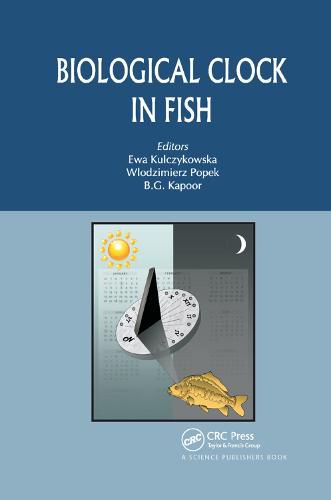
Each organism has its own internal biological clock, which is reset by environmental cues (Zeitgebers), thus keeping it synchronized with the external environment. It is a chemically based oscillating system within cells, relying on molecular feedback loops. Circadian biological clocks exist in most organisms.
What is so special about the clock in fish? Where is it located-in the retina, inside the brain, or in the pineal? What is the molecular basis of its function? How is the clock able to keep time in the absence of environmental cues?
Although biological clocks have been intensively studied over the past four decades, only recently have the tools needed to examine the molecular basis of circadian rhythms become available. This book reviews the state of knowledge in sufficient detail and presents the latest contributions to the field, showing fish provide a unique model of the circadian biological clock.
$9.00 standard shipping within Australia
FREE standard shipping within Australia for orders over $100.00
Express & International shipping calculated at checkout
Stock availability can be subject to change without notice. We recommend calling the shop or contacting our online team to check availability of low stock items. Please see our Shopping Online page for more details.
Each organism has its own internal biological clock, which is reset by environmental cues (Zeitgebers), thus keeping it synchronized with the external environment. It is a chemically based oscillating system within cells, relying on molecular feedback loops. Circadian biological clocks exist in most organisms.
What is so special about the clock in fish? Where is it located-in the retina, inside the brain, or in the pineal? What is the molecular basis of its function? How is the clock able to keep time in the absence of environmental cues?
Although biological clocks have been intensively studied over the past four decades, only recently have the tools needed to examine the molecular basis of circadian rhythms become available. This book reviews the state of knowledge in sufficient detail and presents the latest contributions to the field, showing fish provide a unique model of the circadian biological clock.
Search our extensive online catalogue.
