Readings Newsletter
Become a Readings Member to make your shopping experience even easier.
Sign in or sign up for free!
You’re not far away from qualifying for FREE standard shipping within Australia
You’ve qualified for FREE standard shipping within Australia
The cart is loading…


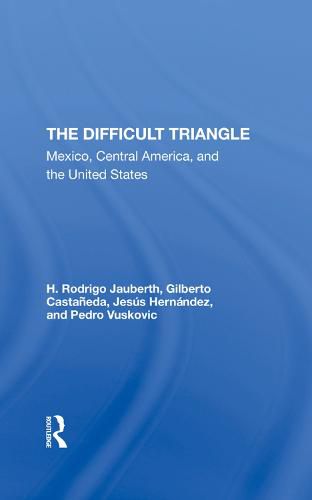
Although relations with Central America dominated U.S. foreign policy with its southern neighbors during the 1980s, relations with Mexico will likely shape U.S. foreign policy in the next decade. This book examines the troubled nature of the triangular link between Mexico, Central America, and the United States in order to understand the implications of U.S. policy for peace and development in the Western Hemisphere. The book begins with an analysis of Mexico’s foreign policy and its historical role in seeking diplomatic solutions to volatile situations in Central America. The authors then assess the probable impact on the region of increased economic integration, particularly the U.S.-Mexico free trade agreement, especially important in light of Mexico’s enormous debt and immigration issues. Special attention is also given to diplomatic aspects of the relationship, with a focus on the process of negotiations to resolve conflicts in Central America. A lengthy epilogue offers critical commentary on key issues discussed in the text by such prominent figures as Jesse Jackson, Carlos Vilas, David Ibarra, and Guadalupe Gonzales.
$9.00 standard shipping within Australia
FREE standard shipping within Australia for orders over $100.00
Express & International shipping calculated at checkout
Stock availability can be subject to change without notice. We recommend calling the shop or contacting our online team to check availability of low stock items. Please see our Shopping Online page for more details.
Although relations with Central America dominated U.S. foreign policy with its southern neighbors during the 1980s, relations with Mexico will likely shape U.S. foreign policy in the next decade. This book examines the troubled nature of the triangular link between Mexico, Central America, and the United States in order to understand the implications of U.S. policy for peace and development in the Western Hemisphere. The book begins with an analysis of Mexico’s foreign policy and its historical role in seeking diplomatic solutions to volatile situations in Central America. The authors then assess the probable impact on the region of increased economic integration, particularly the U.S.-Mexico free trade agreement, especially important in light of Mexico’s enormous debt and immigration issues. Special attention is also given to diplomatic aspects of the relationship, with a focus on the process of negotiations to resolve conflicts in Central America. A lengthy epilogue offers critical commentary on key issues discussed in the text by such prominent figures as Jesse Jackson, Carlos Vilas, David Ibarra, and Guadalupe Gonzales.
Search our extensive online catalogue.
