Readings Newsletter
Become a Readings Member to make your shopping experience even easier.
Sign in or sign up for free!
You’re not far away from qualifying for FREE standard shipping within Australia
You’ve qualified for FREE standard shipping within Australia
The cart is loading…


This title is printed to order. This book may have been self-published. If so, we cannot guarantee the quality of the content. In the main most books will have gone through the editing process however some may not. We therefore suggest that you be aware of this before ordering this book. If in doubt check either the author or publisher’s details as we are unable to accept any returns unless they are faulty. Please contact us if you have any questions.
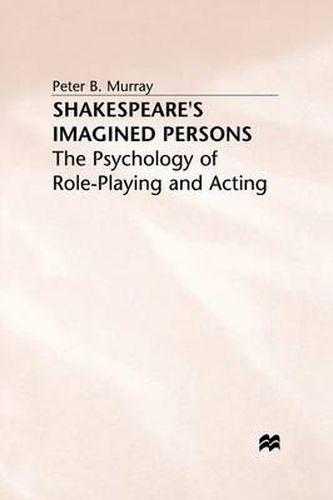
Challenging ideas about psychology in Shakespeare’s time, this text proposes characters should be perceived as imagined persons. A new reading of B.F. Skinner’s radical behaviourism brings out how - contrary to the impression he created - Skinner ascribes an important role in human behaviour to cognitive activity. Using this analysis, Peter Murray demonstrates the consistency of radical behaviourism with the psychology of character formation and acting in writers from Plato to Shakespeare - an approach little explored in the current debates about subjectivity in Elizabethan culture. Murray also shows that radical behaviourism can explain the phenomena observed in modern studies of acting and social role-playing. Drawing on these analyses of earlier and modern psychology, Murray goes on to reveal the dynamics of Shakespeare’s characterizations of Hamlet, Prince Hal, Rosalind and Perdita in an alternative light.
$9.00 standard shipping within Australia
FREE standard shipping within Australia for orders over $100.00
Express & International shipping calculated at checkout
Stock availability can be subject to change without notice. We recommend calling the shop or contacting our online team to check availability of low stock items. Please see our Shopping Online page for more details.
This title is printed to order. This book may have been self-published. If so, we cannot guarantee the quality of the content. In the main most books will have gone through the editing process however some may not. We therefore suggest that you be aware of this before ordering this book. If in doubt check either the author or publisher’s details as we are unable to accept any returns unless they are faulty. Please contact us if you have any questions.
Challenging ideas about psychology in Shakespeare’s time, this text proposes characters should be perceived as imagined persons. A new reading of B.F. Skinner’s radical behaviourism brings out how - contrary to the impression he created - Skinner ascribes an important role in human behaviour to cognitive activity. Using this analysis, Peter Murray demonstrates the consistency of radical behaviourism with the psychology of character formation and acting in writers from Plato to Shakespeare - an approach little explored in the current debates about subjectivity in Elizabethan culture. Murray also shows that radical behaviourism can explain the phenomena observed in modern studies of acting and social role-playing. Drawing on these analyses of earlier and modern psychology, Murray goes on to reveal the dynamics of Shakespeare’s characterizations of Hamlet, Prince Hal, Rosalind and Perdita in an alternative light.
Search our extensive online catalogue.
