Readings Newsletter
Become a Readings Member to make your shopping experience even easier.
Sign in or sign up for free!
You’re not far away from qualifying for FREE standard shipping within Australia
You’ve qualified for FREE standard shipping within Australia
The cart is loading…


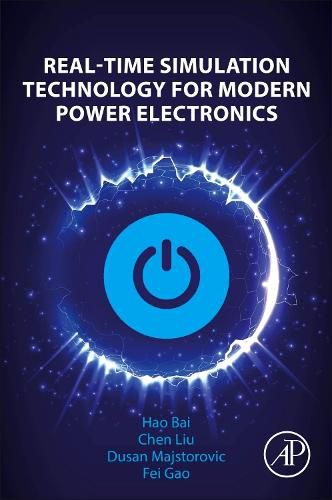
Real-Time Simulation Technology for Modern Power Electronics provides an invaluable foundation and state-of-the-art review on the most advanced implementations of real-time simulation as it appears poised to revolutionize the modeling of power electronics. The book opens with a discussion of power electronics device physic modeling, component modeling, and power converter modeling before addressing numerical methods to solve converter model, emphasizing speed and accuracy. It discusses both CPU-based and FPGA-based real-time implementations and provides an extensive review of current applications, including hardware-in-the-loop and its case studies in the micro-grid and electric vehicle applications.
The book closes with a review of the near and long-term outlooks for the evolving technology. Collectively, the work provides a systematic resource for students, researchers, and engineers in the electrical engineering and other closely related fields.
$9.00 standard shipping within Australia
FREE standard shipping within Australia for orders over $100.00
Express & International shipping calculated at checkout
Stock availability can be subject to change without notice. We recommend calling the shop or contacting our online team to check availability of low stock items. Please see our Shopping Online page for more details.
Real-Time Simulation Technology for Modern Power Electronics provides an invaluable foundation and state-of-the-art review on the most advanced implementations of real-time simulation as it appears poised to revolutionize the modeling of power electronics. The book opens with a discussion of power electronics device physic modeling, component modeling, and power converter modeling before addressing numerical methods to solve converter model, emphasizing speed and accuracy. It discusses both CPU-based and FPGA-based real-time implementations and provides an extensive review of current applications, including hardware-in-the-loop and its case studies in the micro-grid and electric vehicle applications.
The book closes with a review of the near and long-term outlooks for the evolving technology. Collectively, the work provides a systematic resource for students, researchers, and engineers in the electrical engineering and other closely related fields.
Search our extensive online catalogue.
