Readings Newsletter
Become a Readings Member to make your shopping experience even easier.
Sign in or sign up for free!
You’re not far away from qualifying for FREE standard shipping within Australia
You’ve qualified for FREE standard shipping within Australia
The cart is loading…


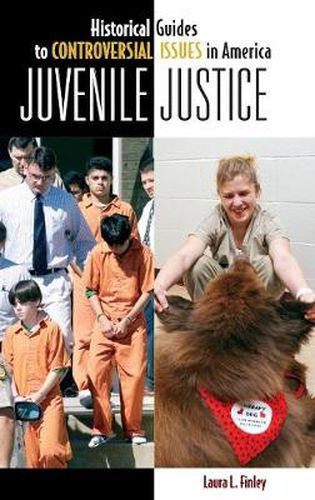
Throughout U.S. history, attitudes toward young people have vacillated between fear of and fear for. These attitudes impact social programs for youth, including the system of juvenile justice. Attitudes are shaped by the socio-political and cultural cliimate of the times, and can be traced back to colonial times. However, changing mores and values often create confusion and conflict, resulting in ineffective strategies for preventing and responding to juvenile delinquency. Tracing the history of juvenile justice back to the pre-colonial era through the present day, Finley sheds light on just how we arrived where we are in terms of juvenile justice. She connects the competing attitudes about young people to the social, economic, and political changes of a given era, and offers recommendations for establishing more effective and more humane policies toward juveniles in the justice system.
Early America is known for its harsh treatment of young people, most notably, the stubborn child laws, which authorized use of the death penalty for children who defied their parents. Yet, even then, many people held more nurturing attitudes toward youth. Thus originated the mixed messages in the U.S. regarding juvenile delinquency and the hodgepodge of approaches that follow. The establishment of the juvenile justice system, founded on the concept of parens patriae, or the state as parent, would seem to have settled the debate over how juvenile offenders should be treated. In reality, however, there remains much controversy over how best to handle juvenile offenders, especially those who commit the most serious offenses. While some still maintain juveniles are developmentally different and should be treated in ways consistent with these differences, others are dismayed at what they feel to be a system that is too lenient and that leads to higher juvenile crime rates and more serious offenses.
With the advent of three strikes laws, curfew laws, boot camps, and referring juveniles to adult courts, and subsequently assigning them to adult prisons, many question just how we got to this place in juvenile justice. Here, Finley offers the history behind the controversial goals and development of the juvenile justice system, providing detailed descriptions of the major trends in juvenile justice. Addressing the most current aspects of the controversy, she also sheds light on issues of race, social class, and gender. Offering recommendations for addressing the weaknesses and confusion in the system, Finley offers a unique and compelling perspective on controversial subject.
$9.00 standard shipping within Australia
FREE standard shipping within Australia for orders over $100.00
Express & International shipping calculated at checkout
Stock availability can be subject to change without notice. We recommend calling the shop or contacting our online team to check availability of low stock items. Please see our Shopping Online page for more details.
Throughout U.S. history, attitudes toward young people have vacillated between fear of and fear for. These attitudes impact social programs for youth, including the system of juvenile justice. Attitudes are shaped by the socio-political and cultural cliimate of the times, and can be traced back to colonial times. However, changing mores and values often create confusion and conflict, resulting in ineffective strategies for preventing and responding to juvenile delinquency. Tracing the history of juvenile justice back to the pre-colonial era through the present day, Finley sheds light on just how we arrived where we are in terms of juvenile justice. She connects the competing attitudes about young people to the social, economic, and political changes of a given era, and offers recommendations for establishing more effective and more humane policies toward juveniles in the justice system.
Early America is known for its harsh treatment of young people, most notably, the stubborn child laws, which authorized use of the death penalty for children who defied their parents. Yet, even then, many people held more nurturing attitudes toward youth. Thus originated the mixed messages in the U.S. regarding juvenile delinquency and the hodgepodge of approaches that follow. The establishment of the juvenile justice system, founded on the concept of parens patriae, or the state as parent, would seem to have settled the debate over how juvenile offenders should be treated. In reality, however, there remains much controversy over how best to handle juvenile offenders, especially those who commit the most serious offenses. While some still maintain juveniles are developmentally different and should be treated in ways consistent with these differences, others are dismayed at what they feel to be a system that is too lenient and that leads to higher juvenile crime rates and more serious offenses.
With the advent of three strikes laws, curfew laws, boot camps, and referring juveniles to adult courts, and subsequently assigning them to adult prisons, many question just how we got to this place in juvenile justice. Here, Finley offers the history behind the controversial goals and development of the juvenile justice system, providing detailed descriptions of the major trends in juvenile justice. Addressing the most current aspects of the controversy, she also sheds light on issues of race, social class, and gender. Offering recommendations for addressing the weaknesses and confusion in the system, Finley offers a unique and compelling perspective on controversial subject.
Search our extensive online catalogue.
