Readings Newsletter
Become a Readings Member to make your shopping experience even easier.
Sign in or sign up for free!
You’re not far away from qualifying for FREE standard shipping within Australia
You’ve qualified for FREE standard shipping within Australia
The cart is loading…


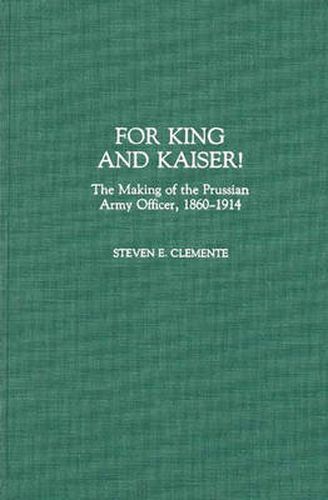
Steven Clemente describes how conservative traditions and aristocratic values were preserved in the selection and training of German army officers prior to World War I despite changing times and the influx of many middle-class recruits into the army. He demonstrates how right thinking and service to the King and the Kaiser were the basis for Prussian officer education in the period from 1860 to 1914. The history provides considerable detail about German secondary school education, the selection of officers, the curriculum, and life in the cadet and war schools, the life of a subaltern, and the education of the Prussian War Academy. The book concludes with an analysis of the attitudes and loyalties of the officers that entered World War I. Students of European history and military affairs may find this study one that raises a number of provocative questions about German performance in World War I and in subsequent years.
$9.00 standard shipping within Australia
FREE standard shipping within Australia for orders over $100.00
Express & International shipping calculated at checkout
Stock availability can be subject to change without notice. We recommend calling the shop or contacting our online team to check availability of low stock items. Please see our Shopping Online page for more details.
Steven Clemente describes how conservative traditions and aristocratic values were preserved in the selection and training of German army officers prior to World War I despite changing times and the influx of many middle-class recruits into the army. He demonstrates how right thinking and service to the King and the Kaiser were the basis for Prussian officer education in the period from 1860 to 1914. The history provides considerable detail about German secondary school education, the selection of officers, the curriculum, and life in the cadet and war schools, the life of a subaltern, and the education of the Prussian War Academy. The book concludes with an analysis of the attitudes and loyalties of the officers that entered World War I. Students of European history and military affairs may find this study one that raises a number of provocative questions about German performance in World War I and in subsequent years.
Search our extensive online catalogue.
