Readings Newsletter
Become a Readings Member to make your shopping experience even easier.
Sign in or sign up for free!
You’re not far away from qualifying for FREE standard shipping within Australia
You’ve qualified for FREE standard shipping within Australia
The cart is loading…


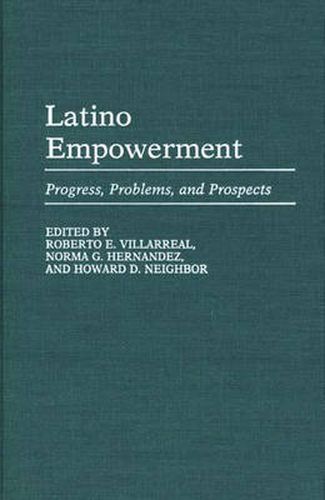
This exemplary contribution to the literature on ethnic studies examines the issues surrounding Mexican-American political empowerment in the United States. The chapters, originally contributions to a symposium at the University of Texas in El Paso, are uniformly engaging, rigorous in their analysis, and richly suggestive in their conclusions. This exceptionally fine collection discusses the political history of Mexican-Americans, the role of their interest groups, educational models, local bureaucracies, and electoral strategies. Noteworthy are the barriers to Chicano authority found in Los Angeles and Texas. Strongly recommended.
Library Journal
This timely book is among the first to be published that directly addresses the political empowerment of Hispanics. The contributors concern themselves not only with the progress and problems of political empowerment, but also with the prospects of future empowerment–the political strategies and agendas for the next decade. Conducted by a group of scholars well known for their research on Chicano politics, the studies suggest that while substantial progress has been made in opening political doors to Mexican Americans, most of their political potential has yet to be realized.
The volume begins with an overview of the history of Mexican-American political empowerment from 1850 to the present. Institutional, procedural, and ideological barriers to success in American politics for Mexican- Americans are reviewed. An examination of two major politics for paradigms for educational achievement reflect different views on educational success and failure. The bureaucracy of local government and its sensitivity in increasing political representation in Los Angeles, the development of political organization and leadership, and future legal issues are covered. In the conclusion, the various perspectives of the contributors are synthesized to point the way to the next level of Mexican-American empowerment, and ultimately, to a general theory of political integration.
$9.00 standard shipping within Australia
FREE standard shipping within Australia for orders over $100.00
Express & International shipping calculated at checkout
Stock availability can be subject to change without notice. We recommend calling the shop or contacting our online team to check availability of low stock items. Please see our Shopping Online page for more details.
This exemplary contribution to the literature on ethnic studies examines the issues surrounding Mexican-American political empowerment in the United States. The chapters, originally contributions to a symposium at the University of Texas in El Paso, are uniformly engaging, rigorous in their analysis, and richly suggestive in their conclusions. This exceptionally fine collection discusses the political history of Mexican-Americans, the role of their interest groups, educational models, local bureaucracies, and electoral strategies. Noteworthy are the barriers to Chicano authority found in Los Angeles and Texas. Strongly recommended.
Library Journal
This timely book is among the first to be published that directly addresses the political empowerment of Hispanics. The contributors concern themselves not only with the progress and problems of political empowerment, but also with the prospects of future empowerment–the political strategies and agendas for the next decade. Conducted by a group of scholars well known for their research on Chicano politics, the studies suggest that while substantial progress has been made in opening political doors to Mexican Americans, most of their political potential has yet to be realized.
The volume begins with an overview of the history of Mexican-American political empowerment from 1850 to the present. Institutional, procedural, and ideological barriers to success in American politics for Mexican- Americans are reviewed. An examination of two major politics for paradigms for educational achievement reflect different views on educational success and failure. The bureaucracy of local government and its sensitivity in increasing political representation in Los Angeles, the development of political organization and leadership, and future legal issues are covered. In the conclusion, the various perspectives of the contributors are synthesized to point the way to the next level of Mexican-American empowerment, and ultimately, to a general theory of political integration.
Search our extensive online catalogue.
