Readings Newsletter
Become a Readings Member to make your shopping experience even easier.
Sign in or sign up for free!
You’re not far away from qualifying for FREE standard shipping within Australia
You’ve qualified for FREE standard shipping within Australia
The cart is loading…


This title is printed to order. This book may have been self-published. If so, we cannot guarantee the quality of the content. In the main most books will have gone through the editing process however some may not. We therefore suggest that you be aware of this before ordering this book. If in doubt check either the author or publisher’s details as we are unable to accept any returns unless they are faulty. Please contact us if you have any questions.
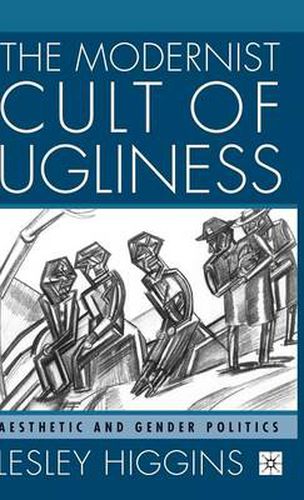
Cult of Ugliness , Ezra Pound’s phrase, summarizes the ways in which modernists such as Pound, T.S. Eliot, Wyndham Lewis, and T.E. Hulme the self styled Men of 1914 responded to the horrid or sordid or disgusting conditions of modernity by radically changing aesthetic theory and literary practices. Only the representation of ugliness , they protested, would produce the new, truly beautiful work of art. Claiming membership in a cult, however playfully, was a crucial means of group and self-representation and promotion, a defense against personal, socio economic, and artistic marginalization. Strategically, they dissociated the Beautiful from its traditional, troubling embodiment in female beauty, and from its more recent association with Walter Pater and Oscar Wilde. In effect, the deliberate cultivation of ugliness provided the means to displace the misogyny and homophobia which governed individual and artistic responses and utterances. This feminist argument takes in texts such as John Ruskin’s foundational art criticism, Eliot’s uncollected literary journalism, Lewis’s pro-fascism pamphlets of the 1930s, and the city poetry of Pound, Conrad Aiken, and Langston Hughes. Analyses of Whistler’s paintings and the poetry of W.B. Yeats demonstrate that even those who claimed to be the most vigorous champions of Beauty were committed to aesthetic practices that disempowered female figures in order to articulate new truths of male artistic mastery.
$9.00 standard shipping within Australia
FREE standard shipping within Australia for orders over $100.00
Express & International shipping calculated at checkout
Stock availability can be subject to change without notice. We recommend calling the shop or contacting our online team to check availability of low stock items. Please see our Shopping Online page for more details.
This title is printed to order. This book may have been self-published. If so, we cannot guarantee the quality of the content. In the main most books will have gone through the editing process however some may not. We therefore suggest that you be aware of this before ordering this book. If in doubt check either the author or publisher’s details as we are unable to accept any returns unless they are faulty. Please contact us if you have any questions.
Cult of Ugliness , Ezra Pound’s phrase, summarizes the ways in which modernists such as Pound, T.S. Eliot, Wyndham Lewis, and T.E. Hulme the self styled Men of 1914 responded to the horrid or sordid or disgusting conditions of modernity by radically changing aesthetic theory and literary practices. Only the representation of ugliness , they protested, would produce the new, truly beautiful work of art. Claiming membership in a cult, however playfully, was a crucial means of group and self-representation and promotion, a defense against personal, socio economic, and artistic marginalization. Strategically, they dissociated the Beautiful from its traditional, troubling embodiment in female beauty, and from its more recent association with Walter Pater and Oscar Wilde. In effect, the deliberate cultivation of ugliness provided the means to displace the misogyny and homophobia which governed individual and artistic responses and utterances. This feminist argument takes in texts such as John Ruskin’s foundational art criticism, Eliot’s uncollected literary journalism, Lewis’s pro-fascism pamphlets of the 1930s, and the city poetry of Pound, Conrad Aiken, and Langston Hughes. Analyses of Whistler’s paintings and the poetry of W.B. Yeats demonstrate that even those who claimed to be the most vigorous champions of Beauty were committed to aesthetic practices that disempowered female figures in order to articulate new truths of male artistic mastery.
Search our extensive online catalogue.
