Readings Newsletter
Become a Readings Member to make your shopping experience even easier.
Sign in or sign up for free!
You’re not far away from qualifying for FREE standard shipping within Australia
You’ve qualified for FREE standard shipping within Australia
The cart is loading…


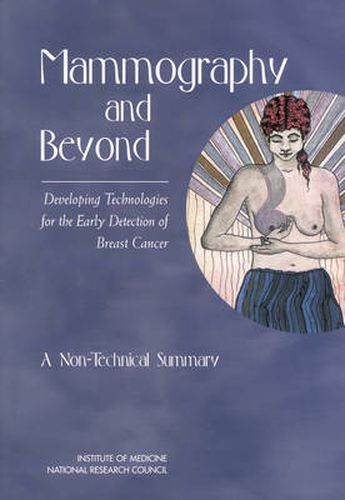
X-ray mammography screening is the current mainstay for early breast cancer detection. It has been proven to detect breast cancer at an earlier stage and to reduce the number of women dying from the disease. However, it has a number of limitations. These current limitations in early breast cancer detection technology are driving a surge of new technological developments, from modifications of x-ray mammography such as computer programs that can indicate suspicious areas, to newer methods of detection such as magnetic resonance imaging (MRI) or biochemical tests on breast fluids. To explore the merits and drawbacks of these new breast cancer detection techniques, the Institute of Medicine of the National Academy of Sciences convened a committee of experts. During its year of operation, the committee examined the peer-reviewed literature, consulted with other experts in the field, and held two public workshops. In addition to identifying promising new technologies for early detection, the committee explored potential barriers that might prevent the development of new detection methods and their common usage. Such barriers could include lack of funding from agencies that support research and lack of investment in the commercial sector; complicated, inconsistent, or unpredictable federal regulations; inadequate insurance reimbursement; and limited access to or unacceptability of breast cancer detection technology for women and their doctors. Based on the findings of their study, the committee prepared a report entitled Mammography and Beyond: Developing Technology for Early Detection of Breast Cancer, which was published in the spring of 2001. This is a non-technical summary of that report.
$9.00 standard shipping within Australia
FREE standard shipping within Australia for orders over $100.00
Express & International shipping calculated at checkout
Stock availability can be subject to change without notice. We recommend calling the shop or contacting our online team to check availability of low stock items. Please see our Shopping Online page for more details.
X-ray mammography screening is the current mainstay for early breast cancer detection. It has been proven to detect breast cancer at an earlier stage and to reduce the number of women dying from the disease. However, it has a number of limitations. These current limitations in early breast cancer detection technology are driving a surge of new technological developments, from modifications of x-ray mammography such as computer programs that can indicate suspicious areas, to newer methods of detection such as magnetic resonance imaging (MRI) or biochemical tests on breast fluids. To explore the merits and drawbacks of these new breast cancer detection techniques, the Institute of Medicine of the National Academy of Sciences convened a committee of experts. During its year of operation, the committee examined the peer-reviewed literature, consulted with other experts in the field, and held two public workshops. In addition to identifying promising new technologies for early detection, the committee explored potential barriers that might prevent the development of new detection methods and their common usage. Such barriers could include lack of funding from agencies that support research and lack of investment in the commercial sector; complicated, inconsistent, or unpredictable federal regulations; inadequate insurance reimbursement; and limited access to or unacceptability of breast cancer detection technology for women and their doctors. Based on the findings of their study, the committee prepared a report entitled Mammography and Beyond: Developing Technology for Early Detection of Breast Cancer, which was published in the spring of 2001. This is a non-technical summary of that report.
Search our extensive online catalogue.
