Readings Newsletter
Become a Readings Member to make your shopping experience even easier.
Sign in or sign up for free!
You’re not far away from qualifying for FREE standard shipping within Australia
You’ve qualified for FREE standard shipping within Australia
The cart is loading…


This title is printed to order. This book may have been self-published. If so, we cannot guarantee the quality of the content. In the main most books will have gone through the editing process however some may not. We therefore suggest that you be aware of this before ordering this book. If in doubt check either the author or publisher’s details as we are unable to accept any returns unless they are faulty. Please contact us if you have any questions.
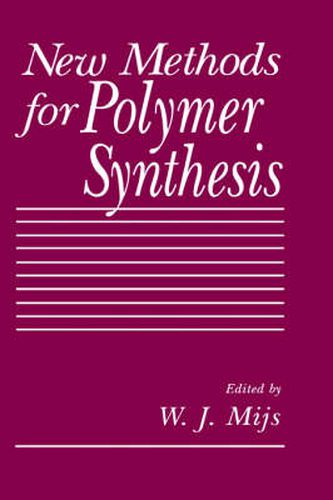
The art and science of macromolecular architecture is based on synthesis, analysis, processing, and evaluation of physical properties of polymers. The growing specificity of available synthetic methods and the increasing refinement of analytical and physical analysis are gradually providing a deeper insight into structure-property relationships of polymers, upon which many applications can be based. This book deals with recent methods for polymer synthesis. Those that lead to specific structures have been selected especially. Background, mechanism scope and limitations, and illustrative procedures are given for each method. With this layout the editor hopes that the book will provide a practical guideline, for the synthetic polymer chemist in industry or at a university graduate school, on how to apply the methods in the design of new polymer structures. The editor is grateful to the authors not only for their contributions containing interesting new developments in polymer synthesis, but also for the way they have fitted their text into the general framework of the book. The elegant chemistry described in the following chapters will, it is hoped, inspire more organic chemists to apply their skills to polymer synthesis, where the beauty of organic chemistry in terms of structural control and reactivity may be even more apparent than in the low molecular field.
$9.00 standard shipping within Australia
FREE standard shipping within Australia for orders over $100.00
Express & International shipping calculated at checkout
Stock availability can be subject to change without notice. We recommend calling the shop or contacting our online team to check availability of low stock items. Please see our Shopping Online page for more details.
This title is printed to order. This book may have been self-published. If so, we cannot guarantee the quality of the content. In the main most books will have gone through the editing process however some may not. We therefore suggest that you be aware of this before ordering this book. If in doubt check either the author or publisher’s details as we are unable to accept any returns unless they are faulty. Please contact us if you have any questions.
The art and science of macromolecular architecture is based on synthesis, analysis, processing, and evaluation of physical properties of polymers. The growing specificity of available synthetic methods and the increasing refinement of analytical and physical analysis are gradually providing a deeper insight into structure-property relationships of polymers, upon which many applications can be based. This book deals with recent methods for polymer synthesis. Those that lead to specific structures have been selected especially. Background, mechanism scope and limitations, and illustrative procedures are given for each method. With this layout the editor hopes that the book will provide a practical guideline, for the synthetic polymer chemist in industry or at a university graduate school, on how to apply the methods in the design of new polymer structures. The editor is grateful to the authors not only for their contributions containing interesting new developments in polymer synthesis, but also for the way they have fitted their text into the general framework of the book. The elegant chemistry described in the following chapters will, it is hoped, inspire more organic chemists to apply their skills to polymer synthesis, where the beauty of organic chemistry in terms of structural control and reactivity may be even more apparent than in the low molecular field.
Search our extensive online catalogue.
