Readings Newsletter
Become a Readings Member to make your shopping experience even easier.
Sign in or sign up for free!
You’re not far away from qualifying for FREE standard shipping within Australia
You’ve qualified for FREE standard shipping within Australia
The cart is loading…


This title is printed to order. This book may have been self-published. If so, we cannot guarantee the quality of the content. In the main most books will have gone through the editing process however some may not. We therefore suggest that you be aware of this before ordering this book. If in doubt check either the author or publisher’s details as we are unable to accept any returns unless they are faulty. Please contact us if you have any questions.
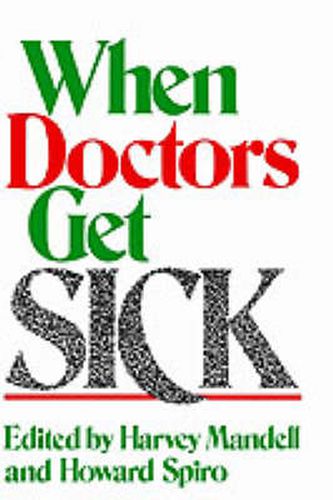
When a doctor gets sick, his status changes. No longer is his role de fined as deriving from doctus, i. e. , learned, but as from patiens, the present participle of the deponent verb, patior, i. e. , to suffer, with all the passive acceptance of pain the verb implies. From pass us, the past participle, we get the word passion, with its wide gamut of emotional allusions, ranging from animal lust to the sufferings of martyrs. It is the connotation, not the denotation, of the word that defines the change of status. When a doctor is sick enough to be admitted to a hospital, he can no longer write orders; orders are written about him, removing him from control of his own situation. One recalls a sonnet from W. H. Auden’s sequence, The Quest, which closes with the lines: Unluckily they were their situation: One should not give a poisoner medicine, A conjuror fine apparatus, Nor a rifle to a melancholic bore. That is a reasonable expression of twentieth-century skepticism and ra tionalism. Almost all medical literature is written from the doctor’s point of view. Only a few medically trained writers-one thinks of Chekhov’s Ward Six-manage to incorporate the patient’s response to his situa tion. Patients’ voices were not much in evidence until well into the twentieth century, but an early example is John Donne’s Devotions upon Emergent Occasions (1624).
$9.00 standard shipping within Australia
FREE standard shipping within Australia for orders over $100.00
Express & International shipping calculated at checkout
Stock availability can be subject to change without notice. We recommend calling the shop or contacting our online team to check availability of low stock items. Please see our Shopping Online page for more details.
This title is printed to order. This book may have been self-published. If so, we cannot guarantee the quality of the content. In the main most books will have gone through the editing process however some may not. We therefore suggest that you be aware of this before ordering this book. If in doubt check either the author or publisher’s details as we are unable to accept any returns unless they are faulty. Please contact us if you have any questions.
When a doctor gets sick, his status changes. No longer is his role de fined as deriving from doctus, i. e. , learned, but as from patiens, the present participle of the deponent verb, patior, i. e. , to suffer, with all the passive acceptance of pain the verb implies. From pass us, the past participle, we get the word passion, with its wide gamut of emotional allusions, ranging from animal lust to the sufferings of martyrs. It is the connotation, not the denotation, of the word that defines the change of status. When a doctor is sick enough to be admitted to a hospital, he can no longer write orders; orders are written about him, removing him from control of his own situation. One recalls a sonnet from W. H. Auden’s sequence, The Quest, which closes with the lines: Unluckily they were their situation: One should not give a poisoner medicine, A conjuror fine apparatus, Nor a rifle to a melancholic bore. That is a reasonable expression of twentieth-century skepticism and ra tionalism. Almost all medical literature is written from the doctor’s point of view. Only a few medically trained writers-one thinks of Chekhov’s Ward Six-manage to incorporate the patient’s response to his situa tion. Patients’ voices were not much in evidence until well into the twentieth century, but an early example is John Donne’s Devotions upon Emergent Occasions (1624).
Search our extensive online catalogue.
