Readings Newsletter
Become a Readings Member to make your shopping experience even easier.
Sign in or sign up for free!
You’re not far away from qualifying for FREE standard shipping within Australia
You’ve qualified for FREE standard shipping within Australia
The cart is loading…


This title is printed to order. This book may have been self-published. If so, we cannot guarantee the quality of the content. In the main most books will have gone through the editing process however some may not. We therefore suggest that you be aware of this before ordering this book. If in doubt check either the author or publisher’s details as we are unable to accept any returns unless they are faulty. Please contact us if you have any questions.
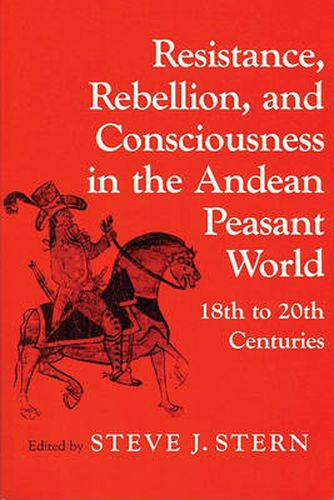
This collection of essays challenges our understanding of the history of native Andean rebellion during the last three centuries.
The contributors-historians and anthropologists from a number of countries-move beyond the traditional structural analysis of society to a finer understanding of people as actors. Native Andean initiatives and consciousness are clearly placed at the center of this inquiry, which merges the best methods of history an anthropology.
Stern begins with a vigorously argued theoretical essay in which he identifies major findings and arguments running throughout the book, demonstrates their pertinence to the more general field of peasant studies, and draws out the implications for theory and method. He reappraises the role of peasant consciousness and political horizons; and the significance of ethnic factors in explaining peasant consciousness and revolt.
The case studies themselves revamp the history of Andean peasant rebellion and consciousness in Peru and Bolivia. This is accomplished by studying violent uprisings as transitional moments within a long-term trajectory embracing varied forms of resistance, and by scrutinizing closely the ideological and cultural aspects of domination, political legitimacy, and rebellion. The results sharply alter our understanding of three major historical problems: the crisis of Spanish colonial rule and the outbreak of native Andean insurrection in the eighteenth century; the response to peasants to creole wars and nation-building efforts in the nineteenth century; and the political strategies and dilemmas of Andean peasants in the context of populist and radical politics in the twentieth century.
$9.00 standard shipping within Australia
FREE standard shipping within Australia for orders over $100.00
Express & International shipping calculated at checkout
Stock availability can be subject to change without notice. We recommend calling the shop or contacting our online team to check availability of low stock items. Please see our Shopping Online page for more details.
This title is printed to order. This book may have been self-published. If so, we cannot guarantee the quality of the content. In the main most books will have gone through the editing process however some may not. We therefore suggest that you be aware of this before ordering this book. If in doubt check either the author or publisher’s details as we are unable to accept any returns unless they are faulty. Please contact us if you have any questions.
This collection of essays challenges our understanding of the history of native Andean rebellion during the last three centuries.
The contributors-historians and anthropologists from a number of countries-move beyond the traditional structural analysis of society to a finer understanding of people as actors. Native Andean initiatives and consciousness are clearly placed at the center of this inquiry, which merges the best methods of history an anthropology.
Stern begins with a vigorously argued theoretical essay in which he identifies major findings and arguments running throughout the book, demonstrates their pertinence to the more general field of peasant studies, and draws out the implications for theory and method. He reappraises the role of peasant consciousness and political horizons; and the significance of ethnic factors in explaining peasant consciousness and revolt.
The case studies themselves revamp the history of Andean peasant rebellion and consciousness in Peru and Bolivia. This is accomplished by studying violent uprisings as transitional moments within a long-term trajectory embracing varied forms of resistance, and by scrutinizing closely the ideological and cultural aspects of domination, political legitimacy, and rebellion. The results sharply alter our understanding of three major historical problems: the crisis of Spanish colonial rule and the outbreak of native Andean insurrection in the eighteenth century; the response to peasants to creole wars and nation-building efforts in the nineteenth century; and the political strategies and dilemmas of Andean peasants in the context of populist and radical politics in the twentieth century.
Search our extensive online catalogue.
