Readings Newsletter
Become a Readings Member to make your shopping experience even easier.
Sign in or sign up for free!
You’re not far away from qualifying for FREE standard shipping within Australia
You’ve qualified for FREE standard shipping within Australia
The cart is loading…


When saving wetlands imperils Black futures, restoration demands reimagination
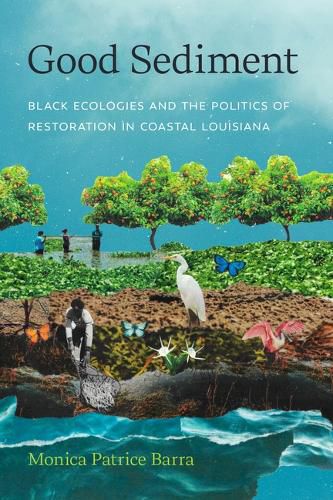
Coastal Louisiana is losing land at an unprecedented rate, and in response, scientists and policymakers have turned to massive restoration projects to slow the erosion. Good Sediment enters this charged landscape, where the promise of ecological renewal collides with the lived realities of Black coastal communities in Plaquemines Parish.
At the center of the book is the Mid-Barataria Sediment Diversion, the state's most ambitious and controversial project: a $2 billion engineering feat that would redirect the Mississippi River's mud and silt into disappearing wetlands. For policymakers, the river's sediment is salvation. For the Parish's multigenerational Black communities, however, this "good sediment" carries profound risks, including flooding homes and undermining fishing livelihoods.
Through ethnographic research, Monica Patrice Barra traces the multiple meanings of restoration as scientists, engineers, and Afro-descendant communities wrestle with what it means to "work with nature" in the shadow of climate change. She reveals how technical claims of environmental progress often sidestep questions of environmental racism, and how Black communities press instead for restoration that sustains culture, dignity, and intergenerational survival.
Unsettling the assumption that restoration is inherently benevolent, Good Sediment reframes ecological repair as a political and cultural practice--one that must grapple with the racial histories embedded in the land. This vital work bridges environmental anthropology, political ecology, and Black studies to imagine restoration otherwise: as a project oriented toward protecting Black life.
$9.00 standard shipping within Australia
FREE standard shipping within Australia for orders over $100.00
Express & International shipping calculated at checkout
Stock availability can be subject to change without notice. We recommend calling the shop or contacting our online team to check availability of low stock items. Please see our Shopping Online page for more details.
When saving wetlands imperils Black futures, restoration demands reimagination
Coastal Louisiana is losing land at an unprecedented rate, and in response, scientists and policymakers have turned to massive restoration projects to slow the erosion. Good Sediment enters this charged landscape, where the promise of ecological renewal collides with the lived realities of Black coastal communities in Plaquemines Parish.
At the center of the book is the Mid-Barataria Sediment Diversion, the state's most ambitious and controversial project: a $2 billion engineering feat that would redirect the Mississippi River's mud and silt into disappearing wetlands. For policymakers, the river's sediment is salvation. For the Parish's multigenerational Black communities, however, this "good sediment" carries profound risks, including flooding homes and undermining fishing livelihoods.
Through ethnographic research, Monica Patrice Barra traces the multiple meanings of restoration as scientists, engineers, and Afro-descendant communities wrestle with what it means to "work with nature" in the shadow of climate change. She reveals how technical claims of environmental progress often sidestep questions of environmental racism, and how Black communities press instead for restoration that sustains culture, dignity, and intergenerational survival.
Unsettling the assumption that restoration is inherently benevolent, Good Sediment reframes ecological repair as a political and cultural practice--one that must grapple with the racial histories embedded in the land. This vital work bridges environmental anthropology, political ecology, and Black studies to imagine restoration otherwise: as a project oriented toward protecting Black life.
Search our extensive online catalogue.
