Readings Newsletter
Become a Readings Member to make your shopping experience even easier.
Sign in or sign up for free!
You’re not far away from qualifying for FREE standard shipping within Australia
You’ve qualified for FREE standard shipping within Australia
The cart is loading…


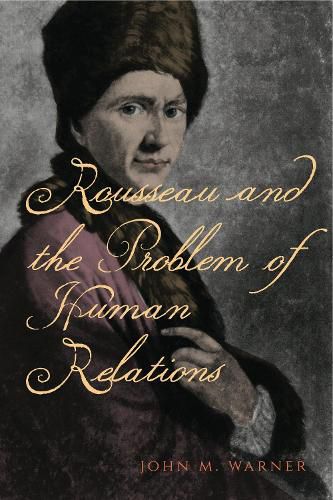
In this volume, John Warner grapples with one of Jean-Jacques Rousseau’s chief preoccupations: the problem of self-interest implicit in all social relationships. Not only did Rousseau never solve this problem, Warner argues, but he also believed it was fundamentally unsolvable-that social relationships could never restore wholeness to a self-interested human being.
This engaging study is founded on two basic but important questions: what do we want out of human relationships, and are we able to achieve what we are after? Warner traces his answers through the contours of Rousseau’s thought on three distinct types of relationships-sexual love, friendship, and civil or political association-as well as alternate interpretations of Rousseau, such as that of the neo-Kantian Rawlsian school. The result is an insightful exploration of the way Rousseau inspires readers to imbue social relations with purpose and meaning, only to show the impossibility of reaching wholeness through such relationships.
While Rousseau may raise our hopes only to dash them, Rousseau and the Problem of Human Relations demonstrates that his ambitious failure offers unexpected insight into the human condition and into the limits of Rousseau’s critical act.
$9.00 standard shipping within Australia
FREE standard shipping within Australia for orders over $100.00
Express & International shipping calculated at checkout
Stock availability can be subject to change without notice. We recommend calling the shop or contacting our online team to check availability of low stock items. Please see our Shopping Online page for more details.
In this volume, John Warner grapples with one of Jean-Jacques Rousseau’s chief preoccupations: the problem of self-interest implicit in all social relationships. Not only did Rousseau never solve this problem, Warner argues, but he also believed it was fundamentally unsolvable-that social relationships could never restore wholeness to a self-interested human being.
This engaging study is founded on two basic but important questions: what do we want out of human relationships, and are we able to achieve what we are after? Warner traces his answers through the contours of Rousseau’s thought on three distinct types of relationships-sexual love, friendship, and civil or political association-as well as alternate interpretations of Rousseau, such as that of the neo-Kantian Rawlsian school. The result is an insightful exploration of the way Rousseau inspires readers to imbue social relations with purpose and meaning, only to show the impossibility of reaching wholeness through such relationships.
While Rousseau may raise our hopes only to dash them, Rousseau and the Problem of Human Relations demonstrates that his ambitious failure offers unexpected insight into the human condition and into the limits of Rousseau’s critical act.
Search our extensive online catalogue.
