Readings Newsletter
Become a Readings Member to make your shopping experience even easier.
Sign in or sign up for free!
You’re not far away from qualifying for FREE standard shipping within Australia
You’ve qualified for FREE standard shipping within Australia
The cart is loading…


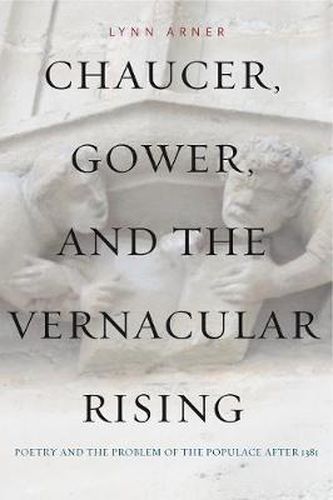
Chaucer, Gower, and the Vernacular Rising examines the transmission of Greco-Roman and European literature into English during the late fourteenth and early fifteenth centuries, while literacy was burgeoning among men and women from the nonruling classes. This dissemination offered a radically democratizing potential for accessing, interpreting, and deploying learned texts. Focusing primarily on an overlooked sector of Chaucer’s and Gower’s early readership, namely, the upper strata of nonruling urban classes, Lynn Arner argues that Chaucer’s and Gower’s writings engaged in elaborate processes of constructing cultural expertise. These writings helped define gradations of cultural authority, determining who could contribute to the production of legitimate knowledge and granting certain socioeconomic groups political leverage in the wake of the English Rising of 1381. Chaucer, Gower, and the Vernacular Rising simultaneously examines Chaucer’s and Gower’s negotiations-often articulated at the site of gender-over poetics and over the roles that vernacular poetry should play in the late medieval English social formation. This study investigates how Chaucer’s and Gower’s texts positioned poetry to become a powerful participant in processes of social control.
$9.00 standard shipping within Australia
FREE standard shipping within Australia for orders over $100.00
Express & International shipping calculated at checkout
Stock availability can be subject to change without notice. We recommend calling the shop or contacting our online team to check availability of low stock items. Please see our Shopping Online page for more details.
Chaucer, Gower, and the Vernacular Rising examines the transmission of Greco-Roman and European literature into English during the late fourteenth and early fifteenth centuries, while literacy was burgeoning among men and women from the nonruling classes. This dissemination offered a radically democratizing potential for accessing, interpreting, and deploying learned texts. Focusing primarily on an overlooked sector of Chaucer’s and Gower’s early readership, namely, the upper strata of nonruling urban classes, Lynn Arner argues that Chaucer’s and Gower’s writings engaged in elaborate processes of constructing cultural expertise. These writings helped define gradations of cultural authority, determining who could contribute to the production of legitimate knowledge and granting certain socioeconomic groups political leverage in the wake of the English Rising of 1381. Chaucer, Gower, and the Vernacular Rising simultaneously examines Chaucer’s and Gower’s negotiations-often articulated at the site of gender-over poetics and over the roles that vernacular poetry should play in the late medieval English social formation. This study investigates how Chaucer’s and Gower’s texts positioned poetry to become a powerful participant in processes of social control.
Search our extensive online catalogue.
