Readings Newsletter
Become a Readings Member to make your shopping experience even easier.
Sign in or sign up for free!
You’re not far away from qualifying for FREE standard shipping within Australia
You’ve qualified for FREE standard shipping within Australia
The cart is loading…


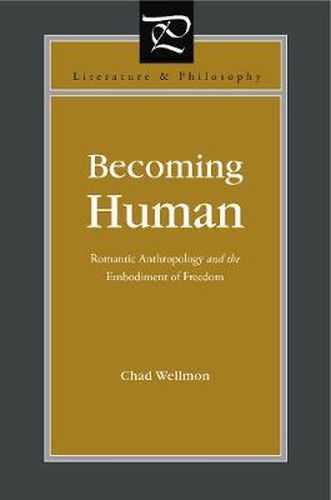
Immanuel Kant wrote that his infamously academic, arid philosophy posed three questions: What can I know? What can I do? What can I be permitted to hope for? He then added a fourth that he claimed would subsume them all: What is the human? This last question, he suggested, could be answered by a new science of man called anthropology. In Becoming Human, Chad Wellmon recounts the emergence of anthropology around a question that had become too capacious for a single discipline and too unstable for the distinctions that had come to ground Enlightenment modernity-distinctions between nature and culture, body and mind, human and animal, European and non-European. If, as Friedrich Schlegel wrote, we don’t even know what the human is, then what would a science of the human base itself on? How would it be possible and why would it even be necessary? This book is an intellectual and literary history of how these questions took form in late eighteenth-century Germany. By examining this period of anthropological discourse through the works of thinkers such as Kant, Novalis, Schleiermacher, Wilhelm von Humboldt, and Goethe, Wellmon argues that the crisis of a late eighteenth-century anthropology marks the emergence of a modernity that sees itself as condemned to draw its norms and very self-understanding from itself. Modernity became fully modern when it became fully reflexive-that is, sensitive to the paradoxical and possibly futile nature of the modern project.
$9.00 standard shipping within Australia
FREE standard shipping within Australia for orders over $100.00
Express & International shipping calculated at checkout
Stock availability can be subject to change without notice. We recommend calling the shop or contacting our online team to check availability of low stock items. Please see our Shopping Online page for more details.
Immanuel Kant wrote that his infamously academic, arid philosophy posed three questions: What can I know? What can I do? What can I be permitted to hope for? He then added a fourth that he claimed would subsume them all: What is the human? This last question, he suggested, could be answered by a new science of man called anthropology. In Becoming Human, Chad Wellmon recounts the emergence of anthropology around a question that had become too capacious for a single discipline and too unstable for the distinctions that had come to ground Enlightenment modernity-distinctions between nature and culture, body and mind, human and animal, European and non-European. If, as Friedrich Schlegel wrote, we don’t even know what the human is, then what would a science of the human base itself on? How would it be possible and why would it even be necessary? This book is an intellectual and literary history of how these questions took form in late eighteenth-century Germany. By examining this period of anthropological discourse through the works of thinkers such as Kant, Novalis, Schleiermacher, Wilhelm von Humboldt, and Goethe, Wellmon argues that the crisis of a late eighteenth-century anthropology marks the emergence of a modernity that sees itself as condemned to draw its norms and very self-understanding from itself. Modernity became fully modern when it became fully reflexive-that is, sensitive to the paradoxical and possibly futile nature of the modern project.
Search our extensive online catalogue.
