Readings Newsletter
Become a Readings Member to make your shopping experience even easier.
Sign in or sign up for free!
You’re not far away from qualifying for FREE standard shipping within Australia
You’ve qualified for FREE standard shipping within Australia
The cart is loading…


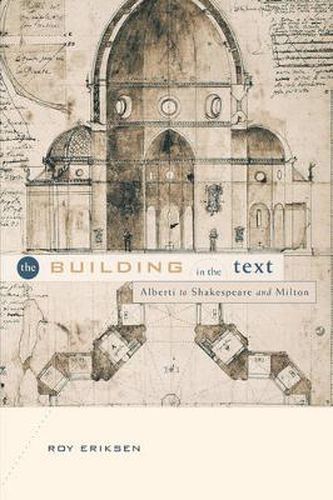
In The Building in the Text, Roy Eriksen shows that Renaissance writers conceived of their texts in accordance with architectural principles. His approach opens the way to wide-ranging discussions of the structure and meaning of a variety of literary texts and also provides new insights into the famed architectural ekphrases of Alberti and Vasari.Analyzing such words as plot,
topos,
fabrica, and stanza, Eriksen discloses the fundamental spatial symmetries and complexities in the writings of Ariosto, Shakespeare, and Milton, among other major figures. Ultimately, his book uncovers and clarifies a tradition of literary architecture that is rooted in antiquity and based on correspondences regarded as ordering principles of the cosmos. Eriksen’s book will be of interest to art historians, historians of literature, and those concerned with the classical heritage, rhetoric, music, and architecture.
$9.00 standard shipping within Australia
FREE standard shipping within Australia for orders over $100.00
Express & International shipping calculated at checkout
Stock availability can be subject to change without notice. We recommend calling the shop or contacting our online team to check availability of low stock items. Please see our Shopping Online page for more details.
In The Building in the Text, Roy Eriksen shows that Renaissance writers conceived of their texts in accordance with architectural principles. His approach opens the way to wide-ranging discussions of the structure and meaning of a variety of literary texts and also provides new insights into the famed architectural ekphrases of Alberti and Vasari.Analyzing such words as plot,
topos,
fabrica, and stanza, Eriksen discloses the fundamental spatial symmetries and complexities in the writings of Ariosto, Shakespeare, and Milton, among other major figures. Ultimately, his book uncovers and clarifies a tradition of literary architecture that is rooted in antiquity and based on correspondences regarded as ordering principles of the cosmos. Eriksen’s book will be of interest to art historians, historians of literature, and those concerned with the classical heritage, rhetoric, music, and architecture.
Search our extensive online catalogue.
