Readings Newsletter
Become a Readings Member to make your shopping experience even easier.
Sign in or sign up for free!
You’re not far away from qualifying for FREE standard shipping within Australia
You’ve qualified for FREE standard shipping within Australia
The cart is loading…


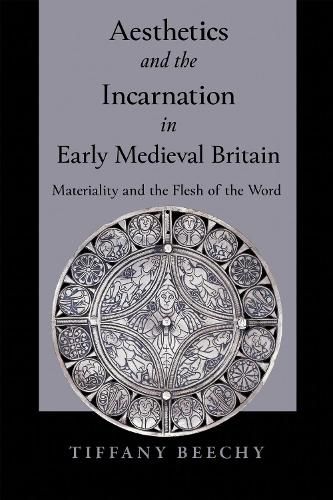
This rich study takes Insular art on its own terms, revealing a distinctive and unorthodox theology that will inevitably change how scholars view the long arc of English piety and the English literary tradition.
Drawing on a wide range of critical methodologies, Aesthetics and the Incarnation in Early Medieval Britain treats this era as a contact zone of cultural clash and exchange, where Christianity encountered a rich amalgam of practices and attitudes, particularly regarding the sensible realm. Tiffany Beechy illustrates how local cultures, including the Irish learned tradition, received the Word that was made flesh, the central figure of Christian doctrine, in distinctive ways: the Word, for example, was verbal, related to words and signs, and was not at all ineffable. Likewise, the Word was often poetic-an enigma-and its powerful presence was not only hinted at (as St. Augustine would have it) but manifest in the mouth or on the page. Beechy examines how these Insular traditions received and expressed a distinctly iterable Incarnation. Often disavowed and condemned by orthodox authorities, this was in large part an implicit theology, expressed or embodied in form (such as art, compilation, or metaphor) rather than in treatises. Beechy demonstrates how these forms drew on various authorities especially important to Britain-Bede, Gregory the Great, and Isidore most prominent among them.
Beechy’s study provides a prehistory in the English literary tradition for the better-known experimental poetics of Middle English devotion. The book is unusual in the diversity of its primary material, which includes visual art, including the Book of Kells; obscure and often cursorily treated texts such as Adamnan’s De locis sanctis ( On the holy lands ); and the difficult esoterica of the wisdom tradition.
$9.00 standard shipping within Australia
FREE standard shipping within Australia for orders over $100.00
Express & International shipping calculated at checkout
Stock availability can be subject to change without notice. We recommend calling the shop or contacting our online team to check availability of low stock items. Please see our Shopping Online page for more details.
This rich study takes Insular art on its own terms, revealing a distinctive and unorthodox theology that will inevitably change how scholars view the long arc of English piety and the English literary tradition.
Drawing on a wide range of critical methodologies, Aesthetics and the Incarnation in Early Medieval Britain treats this era as a contact zone of cultural clash and exchange, where Christianity encountered a rich amalgam of practices and attitudes, particularly regarding the sensible realm. Tiffany Beechy illustrates how local cultures, including the Irish learned tradition, received the Word that was made flesh, the central figure of Christian doctrine, in distinctive ways: the Word, for example, was verbal, related to words and signs, and was not at all ineffable. Likewise, the Word was often poetic-an enigma-and its powerful presence was not only hinted at (as St. Augustine would have it) but manifest in the mouth or on the page. Beechy examines how these Insular traditions received and expressed a distinctly iterable Incarnation. Often disavowed and condemned by orthodox authorities, this was in large part an implicit theology, expressed or embodied in form (such as art, compilation, or metaphor) rather than in treatises. Beechy demonstrates how these forms drew on various authorities especially important to Britain-Bede, Gregory the Great, and Isidore most prominent among them.
Beechy’s study provides a prehistory in the English literary tradition for the better-known experimental poetics of Middle English devotion. The book is unusual in the diversity of its primary material, which includes visual art, including the Book of Kells; obscure and often cursorily treated texts such as Adamnan’s De locis sanctis ( On the holy lands ); and the difficult esoterica of the wisdom tradition.
Search our extensive online catalogue.
