Readings Newsletter
Become a Readings Member to make your shopping experience even easier.
Sign in or sign up for free!
You’re not far away from qualifying for FREE standard shipping within Australia
You’ve qualified for FREE standard shipping within Australia
The cart is loading…


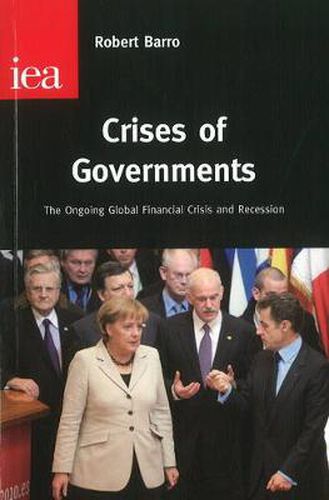
In this short book, Robert Barro, one of the world’s leading economists, examines the causes and consequences of the financial crash. In particular, he looks at the effects of fiscal stimulus packages and suggests that, whilst they may lead to an immediate positive impact on growth, the effect will quickly wear off and the effect of the so-called stimulus packages will then be negative. These are important observations given the pressure that Western governments are under to increase government borrowing in the face of slowing growth rates. The author moves on to discuss what he believes will be the next crisis - a crisis of government indebtedness. This publication is based on a lecture given in July 2011 and such a crisis has, indeed, unfolded. However, Professor Barro expects that this crisis will not be confined to the Eurozone. For example, US states are failing to deal with the problems of both explicit debt and future pensions and social insurance obligations. The author concludes with suggestions as to how governments should deal with these growing problems. This publication should be of interest to all who want to understand the wider economic implications of the financial crisis and the policy response to that crisis.
$9.00 standard shipping within Australia
FREE standard shipping within Australia for orders over $100.00
Express & International shipping calculated at checkout
Stock availability can be subject to change without notice. We recommend calling the shop or contacting our online team to check availability of low stock items. Please see our Shopping Online page for more details.
In this short book, Robert Barro, one of the world’s leading economists, examines the causes and consequences of the financial crash. In particular, he looks at the effects of fiscal stimulus packages and suggests that, whilst they may lead to an immediate positive impact on growth, the effect will quickly wear off and the effect of the so-called stimulus packages will then be negative. These are important observations given the pressure that Western governments are under to increase government borrowing in the face of slowing growth rates. The author moves on to discuss what he believes will be the next crisis - a crisis of government indebtedness. This publication is based on a lecture given in July 2011 and such a crisis has, indeed, unfolded. However, Professor Barro expects that this crisis will not be confined to the Eurozone. For example, US states are failing to deal with the problems of both explicit debt and future pensions and social insurance obligations. The author concludes with suggestions as to how governments should deal with these growing problems. This publication should be of interest to all who want to understand the wider economic implications of the financial crisis and the policy response to that crisis.
Search our extensive online catalogue.
