Readings Newsletter
Become a Readings Member to make your shopping experience even easier.
Sign in or sign up for free!
You’re not far away from qualifying for FREE standard shipping within Australia
You’ve qualified for FREE standard shipping within Australia
The cart is loading…


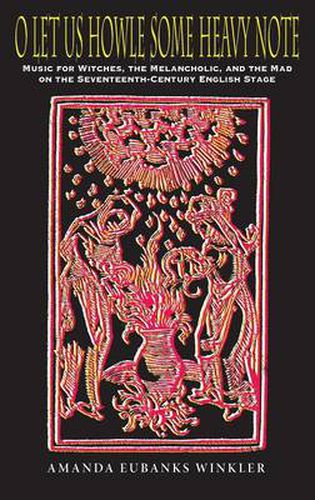
In the 17th century, harmonious sounds were thought to represent the well-ordered body of the obedient subject, and, by extension, the well-ordered state; conversely, discordant, unpleasant music represented both those who caused disorder (murderers, drunkards, witches, traitors) and those who suffered from bodily disorders (melancholics, madmen, and madwomen). While these theoretical correspondences seem straightforward, in theatrical practice the musical portrayals of disorderly characters were multivalent and often ambiguous. O Let Us Howle Some Heavy Note focuses on the various ways that theatrical music represented disorderly subjects - those who presented either a direct or metaphorical threat to the health of the English kingdom in 17th-century England. Using theatre music to examine narratives of social history, Winkler demonstrates how music re-inscribed and often resisted conservative, political, religious, gender, and social ideologies. Amanda Eubanks Winkler is an Assistant Professor in the Department of Fine Arts at Syracuse University, specializing in early music. Her articles and reviews have appeared in Cambridge Opera Journal , Notes , and Journal of Seventeenth-Century Music . She is the author of Music for Macbeth published by A-R Editions.
$9.00 standard shipping within Australia
FREE standard shipping within Australia for orders over $100.00
Express & International shipping calculated at checkout
Stock availability can be subject to change without notice. We recommend calling the shop or contacting our online team to check availability of low stock items. Please see our Shopping Online page for more details.
In the 17th century, harmonious sounds were thought to represent the well-ordered body of the obedient subject, and, by extension, the well-ordered state; conversely, discordant, unpleasant music represented both those who caused disorder (murderers, drunkards, witches, traitors) and those who suffered from bodily disorders (melancholics, madmen, and madwomen). While these theoretical correspondences seem straightforward, in theatrical practice the musical portrayals of disorderly characters were multivalent and often ambiguous. O Let Us Howle Some Heavy Note focuses on the various ways that theatrical music represented disorderly subjects - those who presented either a direct or metaphorical threat to the health of the English kingdom in 17th-century England. Using theatre music to examine narratives of social history, Winkler demonstrates how music re-inscribed and often resisted conservative, political, religious, gender, and social ideologies. Amanda Eubanks Winkler is an Assistant Professor in the Department of Fine Arts at Syracuse University, specializing in early music. Her articles and reviews have appeared in Cambridge Opera Journal , Notes , and Journal of Seventeenth-Century Music . She is the author of Music for Macbeth published by A-R Editions.
Search our extensive online catalogue.
