Readings Newsletter
Become a Readings Member to make your shopping experience even easier.
Sign in or sign up for free!
You’re not far away from qualifying for FREE standard shipping within Australia
You’ve qualified for FREE standard shipping within Australia
The cart is loading…


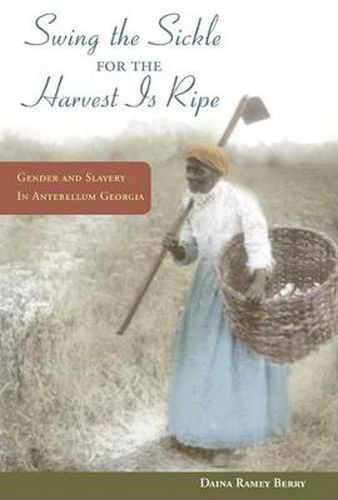
Examining how labor and economy shaped the family life of bondwomen and bondmen in the antebellum South
Swing the Sickle for the Harvest Is Ripe
compares the work, family, and economic experiences of enslaved women and men in upcountry and lowland Georgia during the nineteenth century. Mining planters’ daybooks, plantation records, and a wealth of other sources, Daina Ramey Berry shows how slaves’ experiences on large plantations, which were essentially self-contained, closed communities, contrasted with those on small plantations, where planters’ interests in sharing their workforce allowed slaves more open, fluid communications. By inviting readers into slaves’ internal lives through her detailed examination of domestic violence, separation and sale, and forced breeding, Berry also reveals important new ways of understanding what it meant to be a female or male slave, as well as how public and private aspects of slave life influenced each other on the plantation.
A volume in the series Women in American History, edited by Anne Firor Scott, Susan Armitage, Susan K. Cahn, and Deborah Gray White
$9.00 standard shipping within Australia
FREE standard shipping within Australia for orders over $100.00
Express & International shipping calculated at checkout
Stock availability can be subject to change without notice. We recommend calling the shop or contacting our online team to check availability of low stock items. Please see our Shopping Online page for more details.
Examining how labor and economy shaped the family life of bondwomen and bondmen in the antebellum South
Swing the Sickle for the Harvest Is Ripe
compares the work, family, and economic experiences of enslaved women and men in upcountry and lowland Georgia during the nineteenth century. Mining planters’ daybooks, plantation records, and a wealth of other sources, Daina Ramey Berry shows how slaves’ experiences on large plantations, which were essentially self-contained, closed communities, contrasted with those on small plantations, where planters’ interests in sharing their workforce allowed slaves more open, fluid communications. By inviting readers into slaves’ internal lives through her detailed examination of domestic violence, separation and sale, and forced breeding, Berry also reveals important new ways of understanding what it meant to be a female or male slave, as well as how public and private aspects of slave life influenced each other on the plantation.
A volume in the series Women in American History, edited by Anne Firor Scott, Susan Armitage, Susan K. Cahn, and Deborah Gray White
Search our extensive online catalogue.
