Readings Newsletter
Become a Readings Member to make your shopping experience even easier.
Sign in or sign up for free!
You’re not far away from qualifying for FREE standard shipping within Australia
You’ve qualified for FREE standard shipping within Australia
The cart is loading…


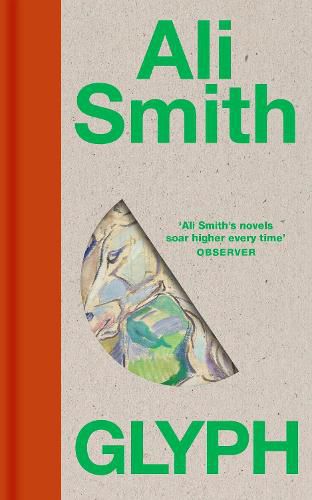
It sounds like Gliff? Well, it's something else altogether.
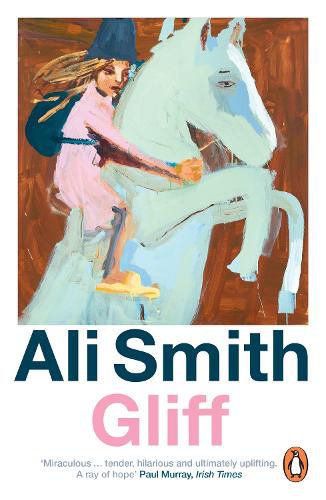
Ghosts don't exist. They don't. End of. Story, however. It is haunting. Everything tells it.
It all starts when Petra and her little sister Patch hear a horrifying story from the past and find themselves making up a ghost. Is it imaginary? Is it real?
Then it all starts again thirty years later when Petra, now estranged from Patch, finds a phantom horse kicking the furniture to pieces in her bedroom. What to do? She phones her sister.
In a chiaroscuro dance through our increasingly antagonistic era, Glyph asks if we're attending to the history that's made us and to the history we're making. A funny, warm and clear-eyed take on where we are now, Glyph is about what our imaginations are for and how, in a broken, brutal and divided time, we rekindle care, solidarity, resistance and openness.
This anti-war novel, Ali Smith's most soulful, playful and vital yet, is a work of lightness that goes deep to counter the forces currently flattening the modern world.
A standalone novel, it's family to Gliff (2024).
$9.00 standard shipping within Australia
FREE standard shipping within Australia for orders over $100.00
Express & International shipping calculated at checkout
Stock availability can be subject to change without notice. We recommend calling the shop or contacting our online team to check availability of low stock items. Please see our Shopping Online page for more details.
It sounds like Gliff? Well, it's something else altogether.
Ghosts don't exist. They don't. End of. Story, however. It is haunting. Everything tells it.
It all starts when Petra and her little sister Patch hear a horrifying story from the past and find themselves making up a ghost. Is it imaginary? Is it real?
Then it all starts again thirty years later when Petra, now estranged from Patch, finds a phantom horse kicking the furniture to pieces in her bedroom. What to do? She phones her sister.
In a chiaroscuro dance through our increasingly antagonistic era, Glyph asks if we're attending to the history that's made us and to the history we're making. A funny, warm and clear-eyed take on where we are now, Glyph is about what our imaginations are for and how, in a broken, brutal and divided time, we rekindle care, solidarity, resistance and openness.
This anti-war novel, Ali Smith's most soulful, playful and vital yet, is a work of lightness that goes deep to counter the forces currently flattening the modern world.
A standalone novel, it's family to Gliff (2024).
This is the second work in Ali Smith’s two-part project that began with Gliff. The first book, when it came out in late 2024, was one of my top reads for the year, so I have been very much looking forward to Glyph’s release.
It feels appropriate when reviewing an Ali Smith novel to consult a dictionary (in this instance, I’m quoting Merriam-Webster). The word ‘gliff’ is from the Scottish dialect, meaning either a glimpse or a sudden fright. This title feels more than apt for a book that presents us a vision of a supposed dystopian future, which in truth is simply a reframing of our present.
One of the definitions of the more familiar word ‘glyph’ is ‘a symbolic figure or a character’. This is something that Smith, in classic form, makes a metaphorical pun of in the story. The titular character of Glyph is, indeed, a symbol. It was the deciphering of this symbol’s meaning that occupied me for a large part of the book.
It would be a mistake to read this as a sequel, but I still think it important to read Gliff first. Glyph sits in some ways as a reference to its predecessor, and in other ways as context for it. Where the young characters of the first book asked us to look forward, and answer an urgent call to action, the second brings us characters who are mired in a past both personal and historical.
Glyph is definitely a more mercurial work than its predecessor. That it should be a less uplifting read is in keeping with the author’s project, and that we have writers who are ready and able to tackle our times head-on is something we should never take for granted.
Ali Smith was born in Inverness in 1962. She is the author of several novels and short story collections including, The Accidental, Hotel World, How to Be Both and the Seasonal Quartet. She has been four times shortlisted for the Booker Prize, has won the Goldsmiths Prize, Orwell Prize, Costa Best Novel Award and the Women's Prize. Ali Smith lives in Cambridge.
Discover our latest new release fiction and nonfiction books.
Looking for a new book? Browse the latest fiction releases.
Search our extensive online catalogue.