Readings Newsletter
Become a Readings Member to make your shopping experience even easier.
Sign in or sign up for free!
You’re not far away from qualifying for FREE standard shipping within Australia
You’ve qualified for FREE standard shipping within Australia
The cart is loading…


Winner, 2024 Choice Outstanding Academic Title
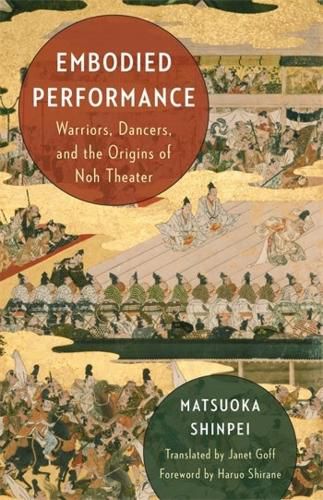
In this groundbreaking book, Matsuoka Shinpei-a leading scholar of noh theater-provides a detailed account of the birth of one of Japan's most celebrated art forms. Although noh has often been associated with the elite, Embodied Performance explores its links to a wider popular culture, revealing a rich and colorful public space where courtiers and commoners mingled.
Matsuoka traces noh's connections to popular and religious dances, linked verse, and chigo (beautiful temple boy) culture, emphasizing performance and the body. He describes the world of noh playwright Zeami as well as his views on dramaturgy and performance-and argues that Zeami was once a chigo. Matsuoka shows how religious rituals and cultural forms like ecstatic dance prayer and plays about demons in hell attracted people on the margins. Such activities, Matsuoka contends, drew on the tension between wild acrobatic movement and corporeal restraint, influencing the development of noh as well as the art of flower arranging and the tea ceremony. Janet Goff's translation makes available in English a classic work of Japanese scholarship that will be invaluable to those interested in medieval Japanese culture, noh, and theatrical practice.
$9.00 standard shipping within Australia
FREE standard shipping within Australia for orders over $100.00
Express & International shipping calculated at checkout
Stock availability can be subject to change without notice. We recommend calling the shop or contacting our online team to check availability of low stock items. Please see our Shopping Online page for more details.
Winner, 2024 Choice Outstanding Academic Title
In this groundbreaking book, Matsuoka Shinpei-a leading scholar of noh theater-provides a detailed account of the birth of one of Japan's most celebrated art forms. Although noh has often been associated with the elite, Embodied Performance explores its links to a wider popular culture, revealing a rich and colorful public space where courtiers and commoners mingled.
Matsuoka traces noh's connections to popular and religious dances, linked verse, and chigo (beautiful temple boy) culture, emphasizing performance and the body. He describes the world of noh playwright Zeami as well as his views on dramaturgy and performance-and argues that Zeami was once a chigo. Matsuoka shows how religious rituals and cultural forms like ecstatic dance prayer and plays about demons in hell attracted people on the margins. Such activities, Matsuoka contends, drew on the tension between wild acrobatic movement and corporeal restraint, influencing the development of noh as well as the art of flower arranging and the tea ceremony. Janet Goff's translation makes available in English a classic work of Japanese scholarship that will be invaluable to those interested in medieval Japanese culture, noh, and theatrical practice.
Search our extensive online catalogue.
