Readings Newsletter
Become a Readings Member to make your shopping experience even easier.
Sign in or sign up for free!
You’re not far away from qualifying for FREE standard shipping within Australia
You’ve qualified for FREE standard shipping within Australia
The cart is loading…


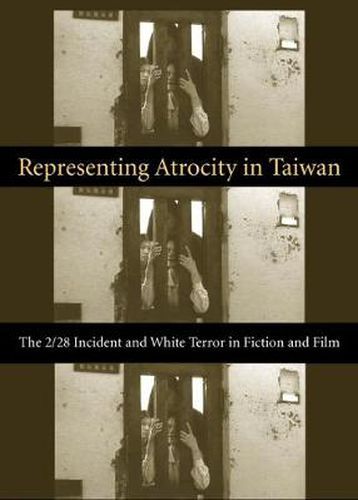
In 1945, Taiwan was placed under the administrative control of the Republic of China, and after two years, accusations of corruption and a failing economy sparked a local protest that was brutally quashed by the Kuomintang government. The February Twenty-Eighth (or 2/28) Incident led to four decades of martial law that became known as the White Terror. During this period, talk of 2/28 was forbidden and all dissent violently suppressed, but since the lifting of martial law in 1987, this long-buried history has been revisited through commemoration and narrative, cinema and remembrance.Drawing on a wealth of secondary theoretical material as well as her own original research, Sylvia Li-chun Lin conducts a close analysis of the political, narrative, and ideological structures involved in the fictional and cinematic representations of the 2/28 Incident and White Terror. She assesses the role of individual and collective memory and institutionalized forgetting, while underscoring the dangers of re-creating a historical past and the risks of trivialization. She also compares her findings with scholarly works on the Holocaust and the aftermath of the atomic bombings of Japan, questioning the politics of forming public and personal memories and the political teleology of closure. This is the first book to be published in English on the 2/28 Incident and White Terror and offers a valuable matrix of comparison for studying the portrayal of atrocity in a specific locale.
$9.00 standard shipping within Australia
FREE standard shipping within Australia for orders over $100.00
Express & International shipping calculated at checkout
Stock availability can be subject to change without notice. We recommend calling the shop or contacting our online team to check availability of low stock items. Please see our Shopping Online page for more details.
In 1945, Taiwan was placed under the administrative control of the Republic of China, and after two years, accusations of corruption and a failing economy sparked a local protest that was brutally quashed by the Kuomintang government. The February Twenty-Eighth (or 2/28) Incident led to four decades of martial law that became known as the White Terror. During this period, talk of 2/28 was forbidden and all dissent violently suppressed, but since the lifting of martial law in 1987, this long-buried history has been revisited through commemoration and narrative, cinema and remembrance.Drawing on a wealth of secondary theoretical material as well as her own original research, Sylvia Li-chun Lin conducts a close analysis of the political, narrative, and ideological structures involved in the fictional and cinematic representations of the 2/28 Incident and White Terror. She assesses the role of individual and collective memory and institutionalized forgetting, while underscoring the dangers of re-creating a historical past and the risks of trivialization. She also compares her findings with scholarly works on the Holocaust and the aftermath of the atomic bombings of Japan, questioning the politics of forming public and personal memories and the political teleology of closure. This is the first book to be published in English on the 2/28 Incident and White Terror and offers a valuable matrix of comparison for studying the portrayal of atrocity in a specific locale.
Search our extensive online catalogue.
