Readings Newsletter
Become a Readings Member to make your shopping experience even easier.
Sign in or sign up for free!
You’re not far away from qualifying for FREE standard shipping within Australia
You’ve qualified for FREE standard shipping within Australia
The cart is loading…


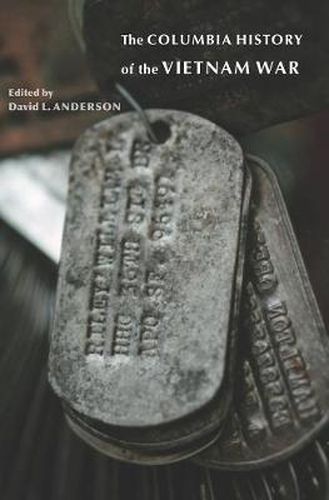
America’s experience in Vietnam continues to figure prominently in debates over strategy and defense and within the discourse on the identity of the United States as a nation. Through fifteen essays rooted in recent scholarship, The Columbia History of the Vietnam War is a chronological and critical collective history central to any discussion of America’s interests abroad.
David Anderson opens with an essay on the Vietnam War’s major themes and enduring relevance. Mark Philip Bradley (University of Chicago) reexamines the rise of Vietnamese revolutionary nationalism and the Vietminh-led war against French colonialism. Richard Immerman (Temple University) revisits Eisenhower’s and Kennedy’s efforts at nation-building in South Vietnam. Gary Hess (Bowling Green State University) reviews America’s military commitment under Kennedy and Johnson, and Lloyd Gardner (Rutgers University) investigates the motivations behind Johnson’s escalation of force. Robert McMahon (Ohio State University) focuses on the pivotal period before and after the Tet Offensive, and Jeffrey Kimball (Miami University) makes sense of Nixon’s paradoxical decision to end U.S. intervention while pursuing a destructive air war.
John Prados (National Security Archive) and Eric Bergerud (Naval Postgraduate School) devote their essays to America’s military strategy. Helen Anderson (California State University, Monterey Bay) and Robert Brigham (Vassar College) explore the war’s impact on Vietnamese women and urban culture. Melvin Small (Wayne State University) recounts the domestic tensions created by America’s involvement in Vietnam, and Kenton Clymer (Northern Illinois University) follows the spread of the war to Laos and Cambodia. Concluding essays by Robert Schulzinger (University of Colorado) and George Herring (University of Kentucky) trace the legacy of the war within Vietnamese and American contexts and diagnose the symptoms of the Vietnam Syndrome evident in later U.S. foreign policy debates.
$9.00 standard shipping within Australia
FREE standard shipping within Australia for orders over $100.00
Express & International shipping calculated at checkout
Stock availability can be subject to change without notice. We recommend calling the shop or contacting our online team to check availability of low stock items. Please see our Shopping Online page for more details.
America’s experience in Vietnam continues to figure prominently in debates over strategy and defense and within the discourse on the identity of the United States as a nation. Through fifteen essays rooted in recent scholarship, The Columbia History of the Vietnam War is a chronological and critical collective history central to any discussion of America’s interests abroad.
David Anderson opens with an essay on the Vietnam War’s major themes and enduring relevance. Mark Philip Bradley (University of Chicago) reexamines the rise of Vietnamese revolutionary nationalism and the Vietminh-led war against French colonialism. Richard Immerman (Temple University) revisits Eisenhower’s and Kennedy’s efforts at nation-building in South Vietnam. Gary Hess (Bowling Green State University) reviews America’s military commitment under Kennedy and Johnson, and Lloyd Gardner (Rutgers University) investigates the motivations behind Johnson’s escalation of force. Robert McMahon (Ohio State University) focuses on the pivotal period before and after the Tet Offensive, and Jeffrey Kimball (Miami University) makes sense of Nixon’s paradoxical decision to end U.S. intervention while pursuing a destructive air war.
John Prados (National Security Archive) and Eric Bergerud (Naval Postgraduate School) devote their essays to America’s military strategy. Helen Anderson (California State University, Monterey Bay) and Robert Brigham (Vassar College) explore the war’s impact on Vietnamese women and urban culture. Melvin Small (Wayne State University) recounts the domestic tensions created by America’s involvement in Vietnam, and Kenton Clymer (Northern Illinois University) follows the spread of the war to Laos and Cambodia. Concluding essays by Robert Schulzinger (University of Colorado) and George Herring (University of Kentucky) trace the legacy of the war within Vietnamese and American contexts and diagnose the symptoms of the Vietnam Syndrome evident in later U.S. foreign policy debates.
Search our extensive online catalogue.
