Readings Newsletter
Become a Readings Member to make your shopping experience even easier.
Sign in or sign up for free!
You’re not far away from qualifying for FREE standard shipping within Australia
You’ve qualified for FREE standard shipping within Australia
The cart is loading…


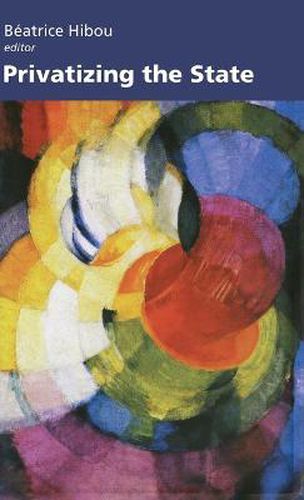
In the new global political economy, privatization names a transformation of the roles of public and private actors with the goal of reforming government policies and economic aid programs. It is an objective, a slogan, a fetish. But what does it signify? On the one hand, it refers to the process of changing industries, businesses, and services from governmental or public ownership to private agencies. But privatization now also extends to what are normally the prerogatives of national states: taxation, customs, internal security, national defense, and peace negotiations. In much of the literature, privatization is associated with the retreat, decline, or even demise of the state.Using Max Weber’s concept of delegation, or discharge, as a point of departure, Hibou and the contributors of this volume propose an alternative view, interpreting the contemporary restructuring of economic and political relations in much of the world as the privatization of the state. This book challenges received ideas about the process of globalization and its presumed homogenization by suggesting that rather than weakening the powers of the state, privatization actually strengthens it. With examples from Russia, Poland, China, Taiwan, Indonesia, North Africa, and sub-Saharan Africa, the book questions the supposed inefficiency of states in regulating capitalism and the role economic and financial knowledge play as substitutes for political and social analysis.
$9.00 standard shipping within Australia
FREE standard shipping within Australia for orders over $100.00
Express & International shipping calculated at checkout
Stock availability can be subject to change without notice. We recommend calling the shop or contacting our online team to check availability of low stock items. Please see our Shopping Online page for more details.
In the new global political economy, privatization names a transformation of the roles of public and private actors with the goal of reforming government policies and economic aid programs. It is an objective, a slogan, a fetish. But what does it signify? On the one hand, it refers to the process of changing industries, businesses, and services from governmental or public ownership to private agencies. But privatization now also extends to what are normally the prerogatives of national states: taxation, customs, internal security, national defense, and peace negotiations. In much of the literature, privatization is associated with the retreat, decline, or even demise of the state.Using Max Weber’s concept of delegation, or discharge, as a point of departure, Hibou and the contributors of this volume propose an alternative view, interpreting the contemporary restructuring of economic and political relations in much of the world as the privatization of the state. This book challenges received ideas about the process of globalization and its presumed homogenization by suggesting that rather than weakening the powers of the state, privatization actually strengthens it. With examples from Russia, Poland, China, Taiwan, Indonesia, North Africa, and sub-Saharan Africa, the book questions the supposed inefficiency of states in regulating capitalism and the role economic and financial knowledge play as substitutes for political and social analysis.
Search our extensive online catalogue.
