Readings Newsletter
Become a Readings Member to make your shopping experience even easier.
Sign in or sign up for free!
You’re not far away from qualifying for FREE standard shipping within Australia
You’ve qualified for FREE standard shipping within Australia
The cart is loading…


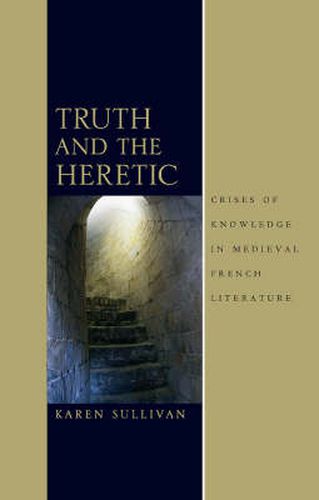
In the Middle Ages, the heretic, more than any other social or religious deviant, was experienced as an imaginary construct. Everyone believed heretics existed, but no one believed himself or herself to be a heretic, even if condemned as such by representatives of the Catholic Church. Those accused of heresy, meanwhile, maintained that they were the good Christians and their accusers were the false ones. Exploring the figure of the heretic in Catholic writings of the twelfth and thirteenth centuries as well as the heretic’s characterological counterpart in troubadour lyrics, Arthurian romance, and comic tales, Truth and the Heretic seeks to understand why French literature of the period celebrated the very characters who were so persecuted in society at large. Karen Sullivan proposes that such literature allowed medieval culture a means by which to express truths about heretics and the epistemological anxieties they aroused. The first book-length study of the figure of the heretic in medieval French literature, Truth and the Heretic explores the relation between orthodoxy and deviance, authority and innovation, and will fascinate historians of ideas and literature as well as scholars of religion, critical theory, and philosophy.
$9.00 standard shipping within Australia
FREE standard shipping within Australia for orders over $100.00
Express & International shipping calculated at checkout
Stock availability can be subject to change without notice. We recommend calling the shop or contacting our online team to check availability of low stock items. Please see our Shopping Online page for more details.
In the Middle Ages, the heretic, more than any other social or religious deviant, was experienced as an imaginary construct. Everyone believed heretics existed, but no one believed himself or herself to be a heretic, even if condemned as such by representatives of the Catholic Church. Those accused of heresy, meanwhile, maintained that they were the good Christians and their accusers were the false ones. Exploring the figure of the heretic in Catholic writings of the twelfth and thirteenth centuries as well as the heretic’s characterological counterpart in troubadour lyrics, Arthurian romance, and comic tales, Truth and the Heretic seeks to understand why French literature of the period celebrated the very characters who were so persecuted in society at large. Karen Sullivan proposes that such literature allowed medieval culture a means by which to express truths about heretics and the epistemological anxieties they aroused. The first book-length study of the figure of the heretic in medieval French literature, Truth and the Heretic explores the relation between orthodoxy and deviance, authority and innovation, and will fascinate historians of ideas and literature as well as scholars of religion, critical theory, and philosophy.
Search our extensive online catalogue.
