Readings Newsletter
Become a Readings Member to make your shopping experience even easier.
Sign in or sign up for free!
You’re not far away from qualifying for FREE standard shipping within Australia
You’ve qualified for FREE standard shipping within Australia
The cart is loading…


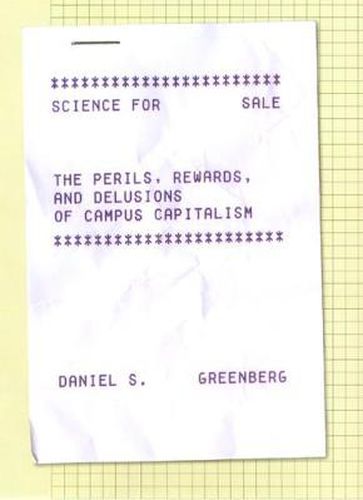
In recent years, the news media have been awash in stories about increasingly close ties between college campuses and multimillion-dollar corporations. Our nation’s universities, the story goes, reap enormous windfalls patenting products of scientific research that have been primarily funded by taxpayers. Meanwhile, hoping for new streams of revenue from their innovations, the same universities are allowing their research - and their very principles - to become compromised by quests for profit. But is that really the case? Is money really hopelessly corrupting science? With Science for Sale , acclaimed journalist Daniel S. Greenberg reveals that campus capitalism is more complicated - and less profitable - than media reports would suggest. While universities seek out corporate funding, news stories rarely note that those industry dollars are dwarfed by government support and other funds. And, while many universities have set up technology transfer offices to pursue profits through patents, many of those offices have been financial busts. Meanwhile, science is showing signs of providing its own solutions, as highly publicized misdeeds in pursuit of profits have provoked promising countermeasures within the field. But just because the threat is overhyped, Greenberg argues, doesn’t mean that there’s no danger. From research that has shifted overseas so corporations can avoid regulations to conflicts of interest in scientific publishing, the temptations of money will always be a threat, and they can only be countered through the vigilance of scientists, the press, and the public. Based on extensive, candid interviews with scientists and administrators, Science for Sale will be indispensable to anyone who cares about the future of scientific research.
$9.00 standard shipping within Australia
FREE standard shipping within Australia for orders over $100.00
Express & International shipping calculated at checkout
Stock availability can be subject to change without notice. We recommend calling the shop or contacting our online team to check availability of low stock items. Please see our Shopping Online page for more details.
In recent years, the news media have been awash in stories about increasingly close ties between college campuses and multimillion-dollar corporations. Our nation’s universities, the story goes, reap enormous windfalls patenting products of scientific research that have been primarily funded by taxpayers. Meanwhile, hoping for new streams of revenue from their innovations, the same universities are allowing their research - and their very principles - to become compromised by quests for profit. But is that really the case? Is money really hopelessly corrupting science? With Science for Sale , acclaimed journalist Daniel S. Greenberg reveals that campus capitalism is more complicated - and less profitable - than media reports would suggest. While universities seek out corporate funding, news stories rarely note that those industry dollars are dwarfed by government support and other funds. And, while many universities have set up technology transfer offices to pursue profits through patents, many of those offices have been financial busts. Meanwhile, science is showing signs of providing its own solutions, as highly publicized misdeeds in pursuit of profits have provoked promising countermeasures within the field. But just because the threat is overhyped, Greenberg argues, doesn’t mean that there’s no danger. From research that has shifted overseas so corporations can avoid regulations to conflicts of interest in scientific publishing, the temptations of money will always be a threat, and they can only be countered through the vigilance of scientists, the press, and the public. Based on extensive, candid interviews with scientists and administrators, Science for Sale will be indispensable to anyone who cares about the future of scientific research.
Search our extensive online catalogue.
