Readings Newsletter
Become a Readings Member to make your shopping experience even easier.
Sign in or sign up for free!
You’re not far away from qualifying for FREE standard shipping within Australia
You’ve qualified for FREE standard shipping within Australia
The cart is loading…


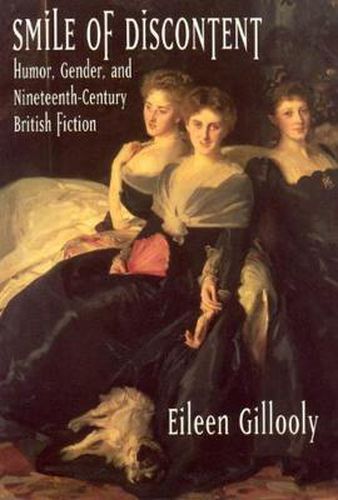
Like sex, Eileen Gillooly argues, humour has long been viewed as a repressed feature of 19th-century femininity. However, in the works of writers such as Jane Austen, George Eliot, Elizabeth Gaskell, Anthony Trollope, and Henry James, Gillooly finds an understated, wryly amusing perspective that differs subtly but significantly in rhetoric, affect, and politics from traditional forms of comic expression. Gillooly shows how such humour became, for mostly female writers at the time, an unobtrusive and prudent means of expressing discontent with a culture that was ideologically committed to restricting female agency and identity. If the aggression and emotional distance of irony and satire mark them as masculine , then for Gillooly, the passivity, indirection, and sympathy of the humour she discusses render it feminine. She goes on to disclose how the humorous tactics employed by writers from Burney to Wharton persist in the work of Barbara Pym, Anita Brookner, and Penelope Fitzgerald.
$9.00 standard shipping within Australia
FREE standard shipping within Australia for orders over $100.00
Express & International shipping calculated at checkout
Stock availability can be subject to change without notice. We recommend calling the shop or contacting our online team to check availability of low stock items. Please see our Shopping Online page for more details.
Like sex, Eileen Gillooly argues, humour has long been viewed as a repressed feature of 19th-century femininity. However, in the works of writers such as Jane Austen, George Eliot, Elizabeth Gaskell, Anthony Trollope, and Henry James, Gillooly finds an understated, wryly amusing perspective that differs subtly but significantly in rhetoric, affect, and politics from traditional forms of comic expression. Gillooly shows how such humour became, for mostly female writers at the time, an unobtrusive and prudent means of expressing discontent with a culture that was ideologically committed to restricting female agency and identity. If the aggression and emotional distance of irony and satire mark them as masculine , then for Gillooly, the passivity, indirection, and sympathy of the humour she discusses render it feminine. She goes on to disclose how the humorous tactics employed by writers from Burney to Wharton persist in the work of Barbara Pym, Anita Brookner, and Penelope Fitzgerald.
Search our extensive online catalogue.
