Readings Newsletter
Become a Readings Member to make your shopping experience even easier.
Sign in or sign up for free!
You’re not far away from qualifying for FREE standard shipping within Australia
You’ve qualified for FREE standard shipping within Australia
The cart is loading…


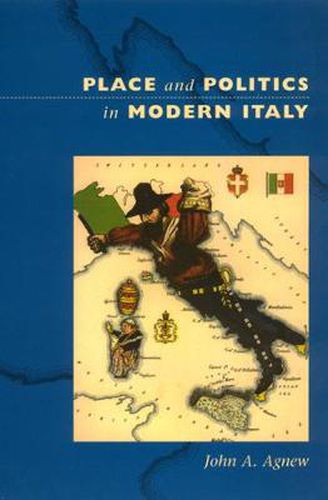
How do the places where people live help structure and restructure their sociopolitical identities and interests? In this book, renowned political geographer John A. Agnew presents a theoretical model that addresses the relation of place to politics and applies it to a series of historicogeographical case studies set in modern Italy. For Agnew, place is not just a static backdrop against which events occur, but a dynamic component of social, economic and political processes. He shows, for instance, how the lack of a common landscape ideal or physical image of Italy delayed the development of a sense of nationhood among Italians after unification. And Agnew uses the post-1992 victory of the Northern League over the Christian Democrats in many parts of northern Italy to explore how parties are replaced geographically during the periods of intense political change. Providing a fresh new approach to studying the role of space and place in social change, Place and Politics in Modern Italy should interest geographers, political scientists and social theorists.
$9.00 standard shipping within Australia
FREE standard shipping within Australia for orders over $100.00
Express & International shipping calculated at checkout
Stock availability can be subject to change without notice. We recommend calling the shop or contacting our online team to check availability of low stock items. Please see our Shopping Online page for more details.
How do the places where people live help structure and restructure their sociopolitical identities and interests? In this book, renowned political geographer John A. Agnew presents a theoretical model that addresses the relation of place to politics and applies it to a series of historicogeographical case studies set in modern Italy. For Agnew, place is not just a static backdrop against which events occur, but a dynamic component of social, economic and political processes. He shows, for instance, how the lack of a common landscape ideal or physical image of Italy delayed the development of a sense of nationhood among Italians after unification. And Agnew uses the post-1992 victory of the Northern League over the Christian Democrats in many parts of northern Italy to explore how parties are replaced geographically during the periods of intense political change. Providing a fresh new approach to studying the role of space and place in social change, Place and Politics in Modern Italy should interest geographers, political scientists and social theorists.
Search our extensive online catalogue.
