Readings Newsletter
Become a Readings Member to make your shopping experience even easier.
Sign in or sign up for free!
You’re not far away from qualifying for FREE standard shipping within Australia
You’ve qualified for FREE standard shipping within Australia
The cart is loading…


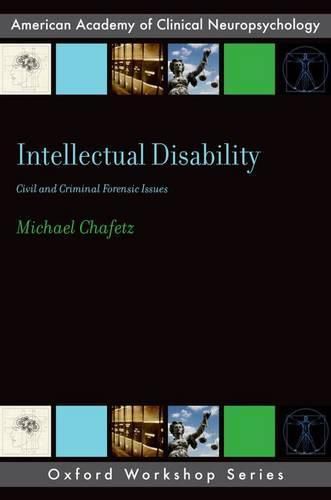
Courts recognize that those who are involved in medico-legal proceedings have a stake in the outcome of their psychological assessment, regardless of whether they are high- or low-functioning individuals. Accounting for the validity of the evaluation in low-functioning examinees is frequently made more difficult by impairment; when evaluating testimony from people with intellectual disability (ID), neuropsychologists and psychologists must acknowledge the differences between the medico-legal evaluation and the clinical evaluation. This book provides helpful guidelines for assessing validity in low-functioning claimants. It charts recent advances in psychological and neuropsychological assessment pertaining to civil and criminal proceedings while examining issues such as validity and motivation, assessments of disability, criminal and civil capacities, capital cases, Miranda waiver cases, and others.In disability cases, the Social Security Administration has had a long-standing policy that prevents neuropsychologists and psychologists from using validity instruments–yet, using this book, an accurate and valid assessment can still be obtained. Evaluators who perform assessments in capital cases will find up-to-date discussions of the Flynn Effect, measurement of intellectual functioning, problems associated with the assessment of adaptive functioning, and the challenge of validity assessment. Miranda waiver evaluations for those with low IQ are discussed concerning issues of capacity measurement, including reading and language analysis for the Miranda advisement in the particular jurisdiction in question. Testamentary capacity is discussed at length, showing how understanding of the legal standard is helpful in guiding the examination. Competency to stand trial, or adjudicative competence, is the main topic in the area of criminal competencies, with exploration of the Dusky standard and the various tests used to evaluate this competence, focusing on individuals with ID.
$9.00 standard shipping within Australia
FREE standard shipping within Australia for orders over $100.00
Express & International shipping calculated at checkout
Stock availability can be subject to change without notice. We recommend calling the shop or contacting our online team to check availability of low stock items. Please see our Shopping Online page for more details.
Courts recognize that those who are involved in medico-legal proceedings have a stake in the outcome of their psychological assessment, regardless of whether they are high- or low-functioning individuals. Accounting for the validity of the evaluation in low-functioning examinees is frequently made more difficult by impairment; when evaluating testimony from people with intellectual disability (ID), neuropsychologists and psychologists must acknowledge the differences between the medico-legal evaluation and the clinical evaluation. This book provides helpful guidelines for assessing validity in low-functioning claimants. It charts recent advances in psychological and neuropsychological assessment pertaining to civil and criminal proceedings while examining issues such as validity and motivation, assessments of disability, criminal and civil capacities, capital cases, Miranda waiver cases, and others.In disability cases, the Social Security Administration has had a long-standing policy that prevents neuropsychologists and psychologists from using validity instruments–yet, using this book, an accurate and valid assessment can still be obtained. Evaluators who perform assessments in capital cases will find up-to-date discussions of the Flynn Effect, measurement of intellectual functioning, problems associated with the assessment of adaptive functioning, and the challenge of validity assessment. Miranda waiver evaluations for those with low IQ are discussed concerning issues of capacity measurement, including reading and language analysis for the Miranda advisement in the particular jurisdiction in question. Testamentary capacity is discussed at length, showing how understanding of the legal standard is helpful in guiding the examination. Competency to stand trial, or adjudicative competence, is the main topic in the area of criminal competencies, with exploration of the Dusky standard and the various tests used to evaluate this competence, focusing on individuals with ID.
Search our extensive online catalogue.
