Readings Newsletter
Become a Readings Member to make your shopping experience even easier.
Sign in or sign up for free!
You’re not far away from qualifying for FREE standard shipping within Australia
You’ve qualified for FREE standard shipping within Australia
The cart is loading…


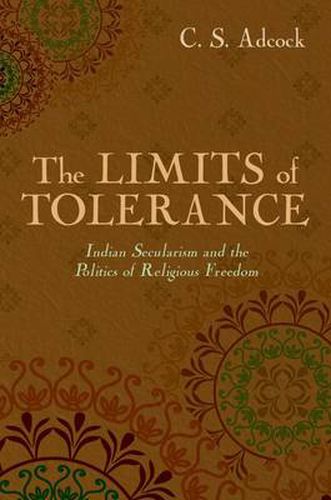
This book provides a critical history of the distinctive tradition of Indian secularism known as Tolerance. Since it was first advanced by Mohandas Gandhi, the Tolerance ideal has measured secularism and civil religiosity by contrast with proselytizing religion. In India today, it informs debates over how the right to religious freedom should be interpreted on the subcontinent. Not only has Tolerance been an important political ideal in India since the early twentieth century; the framing assumptions of Tolerance permeate historical understandings among scholars of South Asian religion and politics. In conventional accounts, the emergence of Tolerance during the 1920s is described as a victory of Indian secularism over the intolerant practice of shuddhi proselytizing , pursued by reformist Hindus of the Arya Samaj, that was threatening harmonious Hindu-Muslim relations. This study shows that the designation of shuddhi as religious proselytizing was not fixed; it was the product of decades of political struggle. The book traces the conditions for the emergence of Tolerance, and the circumstances of its first deployment, by examining the history of debates surrounding Arya Samaj activities in north India between 1880 and 1930. It asks what political considerations governed Indian actors’ efforts to represent shuddhi as religious on different occasions; and it asks what was lost in translation when they did. It reveals that by framing shuddhi decisively as a religious matter, Tolerance functioned to disengage Indian secularism from the politics of caste.
$9.00 standard shipping within Australia
FREE standard shipping within Australia for orders over $100.00
Express & International shipping calculated at checkout
Stock availability can be subject to change without notice. We recommend calling the shop or contacting our online team to check availability of low stock items. Please see our Shopping Online page for more details.
This book provides a critical history of the distinctive tradition of Indian secularism known as Tolerance. Since it was first advanced by Mohandas Gandhi, the Tolerance ideal has measured secularism and civil religiosity by contrast with proselytizing religion. In India today, it informs debates over how the right to religious freedom should be interpreted on the subcontinent. Not only has Tolerance been an important political ideal in India since the early twentieth century; the framing assumptions of Tolerance permeate historical understandings among scholars of South Asian religion and politics. In conventional accounts, the emergence of Tolerance during the 1920s is described as a victory of Indian secularism over the intolerant practice of shuddhi proselytizing , pursued by reformist Hindus of the Arya Samaj, that was threatening harmonious Hindu-Muslim relations. This study shows that the designation of shuddhi as religious proselytizing was not fixed; it was the product of decades of political struggle. The book traces the conditions for the emergence of Tolerance, and the circumstances of its first deployment, by examining the history of debates surrounding Arya Samaj activities in north India between 1880 and 1930. It asks what political considerations governed Indian actors’ efforts to represent shuddhi as religious on different occasions; and it asks what was lost in translation when they did. It reveals that by framing shuddhi decisively as a religious matter, Tolerance functioned to disengage Indian secularism from the politics of caste.
Search our extensive online catalogue.
