Readings Newsletter
Become a Readings Member to make your shopping experience even easier.
Sign in or sign up for free!
You’re not far away from qualifying for FREE standard shipping within Australia
You’ve qualified for FREE standard shipping within Australia
The cart is loading…


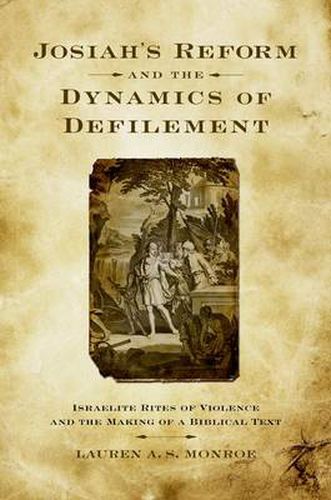
Chapters 22 and 23 of 2 Kings tell the story of the religious reforms of the Judean King Josiah, who systematically destroyed the cult places and installations where his own people worshipped in order to purify Israelite religion and consolidate religious authority in the hands of the Jerusalem temple priests. Josiah’s Reform and the Dynamics of Defilement is the first study to explicitly address the ritual dimensions of the text. Lauren A.S. Monroe argues that the use of cultic and ritual language in the account of the reform is key to understanding the history of the text’s composition, and illuminates the essential, interrelated processes of textual growth and identity construction in ancient Israel. By attending to the specific acts of defilement attributed to Josiah as they resonate within the larger framework of Israelite ritual, Monroe’s work illuminates aspects of the text’s language and fundamental interests that have their closest parallels in the priestly legal corpus known as the Holiness Code (Leviticus 17-26), as well as in other priestly texts that describe methods of eliminating contamination.
The priestly composition was then later reshaped in the hands of a post-Josianic, exilic or post-exilic Deuteronomistic historian who transformed his source material to suit his own ideological interests. The account of Josiah’s reform is thus imprinted with the cultural and religious attitudes of two different sets of authors. Teasing these apart reveals a dialogue on sacred space, sanctified violence and the nature of Israelite religion that was formative in the development not only of 2 Kings 23, but more broadly of the historical books of the Bible.
$9.00 standard shipping within Australia
FREE standard shipping within Australia for orders over $100.00
Express & International shipping calculated at checkout
Stock availability can be subject to change without notice. We recommend calling the shop or contacting our online team to check availability of low stock items. Please see our Shopping Online page for more details.
Chapters 22 and 23 of 2 Kings tell the story of the religious reforms of the Judean King Josiah, who systematically destroyed the cult places and installations where his own people worshipped in order to purify Israelite religion and consolidate religious authority in the hands of the Jerusalem temple priests. Josiah’s Reform and the Dynamics of Defilement is the first study to explicitly address the ritual dimensions of the text. Lauren A.S. Monroe argues that the use of cultic and ritual language in the account of the reform is key to understanding the history of the text’s composition, and illuminates the essential, interrelated processes of textual growth and identity construction in ancient Israel. By attending to the specific acts of defilement attributed to Josiah as they resonate within the larger framework of Israelite ritual, Monroe’s work illuminates aspects of the text’s language and fundamental interests that have their closest parallels in the priestly legal corpus known as the Holiness Code (Leviticus 17-26), as well as in other priestly texts that describe methods of eliminating contamination.
The priestly composition was then later reshaped in the hands of a post-Josianic, exilic or post-exilic Deuteronomistic historian who transformed his source material to suit his own ideological interests. The account of Josiah’s reform is thus imprinted with the cultural and religious attitudes of two different sets of authors. Teasing these apart reveals a dialogue on sacred space, sanctified violence and the nature of Israelite religion that was formative in the development not only of 2 Kings 23, but more broadly of the historical books of the Bible.
Search our extensive online catalogue.
