Readings Newsletter
Become a Readings Member to make your shopping experience even easier.
Sign in or sign up for free!
You’re not far away from qualifying for FREE standard shipping within Australia
You’ve qualified for FREE standard shipping within Australia
The cart is loading…


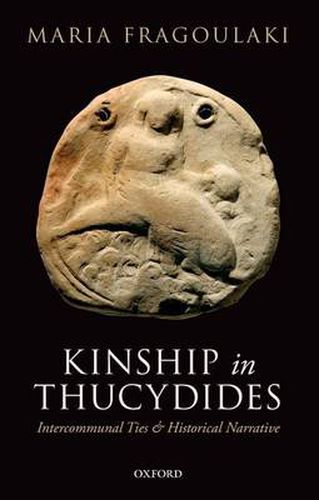
This volume explores the relationship between Thucydides and ancient Greek historiography, sociology, and culture. Presenting a new interpretation of the Peloponnesian War and its historian, it focuses on the role of emotions and ethics in the context of political history and ethnic conflicts. Drawing on modern anthropological enquiries on kinship and the sociology of ethnicity and emotions, and on scholarly work on kinship diplomacy and Greek ethnicity, it argues that inter-communal kinship has a far more pervasive importance in Thucydides than has so far been acknowledged.Through close readings and contextualization of a variety of sources, Fragoulaki discusses the various ways in which ancient Greek communities could be related to each other (colonization, genealogies, belonging to the same ethnic group, socio-cultural symbols, political mechanisms, and institutions) and the largely cultural, emotional, and ethical expression of these ties. Through new readings of the History, such topics as Thucydides’ narrative technique, his challenging silences, his interaction with other genres, and his intense engagement with Herodotus are dissected and discussed - offering a new appreciation of his unique contribution to historiography.
$9.00 standard shipping within Australia
FREE standard shipping within Australia for orders over $100.00
Express & International shipping calculated at checkout
Stock availability can be subject to change without notice. We recommend calling the shop or contacting our online team to check availability of low stock items. Please see our Shopping Online page for more details.
This volume explores the relationship between Thucydides and ancient Greek historiography, sociology, and culture. Presenting a new interpretation of the Peloponnesian War and its historian, it focuses on the role of emotions and ethics in the context of political history and ethnic conflicts. Drawing on modern anthropological enquiries on kinship and the sociology of ethnicity and emotions, and on scholarly work on kinship diplomacy and Greek ethnicity, it argues that inter-communal kinship has a far more pervasive importance in Thucydides than has so far been acknowledged.Through close readings and contextualization of a variety of sources, Fragoulaki discusses the various ways in which ancient Greek communities could be related to each other (colonization, genealogies, belonging to the same ethnic group, socio-cultural symbols, political mechanisms, and institutions) and the largely cultural, emotional, and ethical expression of these ties. Through new readings of the History, such topics as Thucydides’ narrative technique, his challenging silences, his interaction with other genres, and his intense engagement with Herodotus are dissected and discussed - offering a new appreciation of his unique contribution to historiography.
Search our extensive online catalogue.
