Readings Newsletter
Become a Readings Member to make your shopping experience even easier.
Sign in or sign up for free!
You’re not far away from qualifying for FREE standard shipping within Australia
You’ve qualified for FREE standard shipping within Australia
The cart is loading…


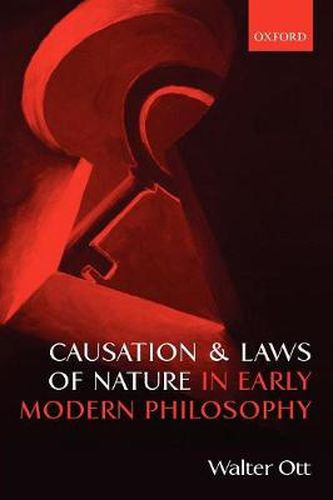
Some philosophers think physical explanations stand on their own: what happens, happens because things have the properties they do. Others think that any such explanation is incomplete: what happens in the physical world must be partly due to the laws of nature. Walter Ott examines the debate between these views from Descartes to Hume, and argues that the competing models of causation in the period grow out of the scholastic notion of power. On this Aristotelian view, the connection between cause and effect is logically necessary. Causes are ‘intrinsically directed’ at what they produce. But when the Aristotelian view is faced with the challenge of mechanism, the core notion of a power splits into two distinct models, each of which persists throughout the early modern period. It is only when seen in this light that the key arguments of the period can reveal their true virtues and flaws.
$9.00 standard shipping within Australia
FREE standard shipping within Australia for orders over $100.00
Express & International shipping calculated at checkout
Stock availability can be subject to change without notice. We recommend calling the shop or contacting our online team to check availability of low stock items. Please see our Shopping Online page for more details.
Some philosophers think physical explanations stand on their own: what happens, happens because things have the properties they do. Others think that any such explanation is incomplete: what happens in the physical world must be partly due to the laws of nature. Walter Ott examines the debate between these views from Descartes to Hume, and argues that the competing models of causation in the period grow out of the scholastic notion of power. On this Aristotelian view, the connection between cause and effect is logically necessary. Causes are ‘intrinsically directed’ at what they produce. But when the Aristotelian view is faced with the challenge of mechanism, the core notion of a power splits into two distinct models, each of which persists throughout the early modern period. It is only when seen in this light that the key arguments of the period can reveal their true virtues and flaws.
Search our extensive online catalogue.
