Readings Newsletter
Become a Readings Member to make your shopping experience even easier.
Sign in or sign up for free!
You’re not far away from qualifying for FREE standard shipping within Australia
You’ve qualified for FREE standard shipping within Australia
The cart is loading…


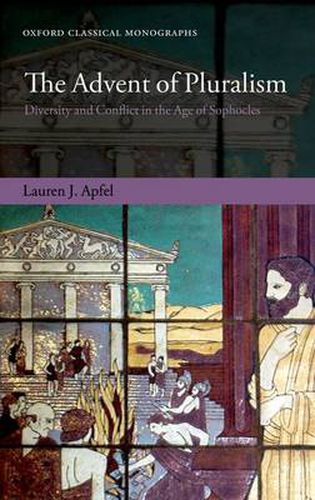
The Advent of Pluralism explores how the philosophical position of pluralism - the idea, made famous by Isaiah Berlin, that values and moral codes can and will come into conflict with one another - has clear and important roots in the Classical Greek world. The book falls into three parts each of which focuses on one author and the ways in which pluralism manifests itself in his particular genre. Part I is concerned with the sophist Protagoras, who was one of the world’s first philosophers and arguably the first exponent of the idea that there can be more than one perspective on truth. Part II looks at pluralism in historical writing, contrasting the methodological and moral styles of the two best-known Greek historians, Thucydides and Herodotus. Part III, on conflict in the tragedies of Sophocles, uses pluralism as a context in which to make sense of the horrible choices the playwright so powerfully dramatizes. Overall, Lauren Apfel’s study identifies a pluralist temper of thought in the age of Sophocles and, in doing so, offers an enriched understanding of this crucial intellectual period.
$9.00 standard shipping within Australia
FREE standard shipping within Australia for orders over $100.00
Express & International shipping calculated at checkout
Stock availability can be subject to change without notice. We recommend calling the shop or contacting our online team to check availability of low stock items. Please see our Shopping Online page for more details.
The Advent of Pluralism explores how the philosophical position of pluralism - the idea, made famous by Isaiah Berlin, that values and moral codes can and will come into conflict with one another - has clear and important roots in the Classical Greek world. The book falls into three parts each of which focuses on one author and the ways in which pluralism manifests itself in his particular genre. Part I is concerned with the sophist Protagoras, who was one of the world’s first philosophers and arguably the first exponent of the idea that there can be more than one perspective on truth. Part II looks at pluralism in historical writing, contrasting the methodological and moral styles of the two best-known Greek historians, Thucydides and Herodotus. Part III, on conflict in the tragedies of Sophocles, uses pluralism as a context in which to make sense of the horrible choices the playwright so powerfully dramatizes. Overall, Lauren Apfel’s study identifies a pluralist temper of thought in the age of Sophocles and, in doing so, offers an enriched understanding of this crucial intellectual period.
Search our extensive online catalogue.
