Readings Newsletter
Become a Readings Member to make your shopping experience even easier.
Sign in or sign up for free!
You’re not far away from qualifying for FREE standard shipping within Australia
You’ve qualified for FREE standard shipping within Australia
The cart is loading…


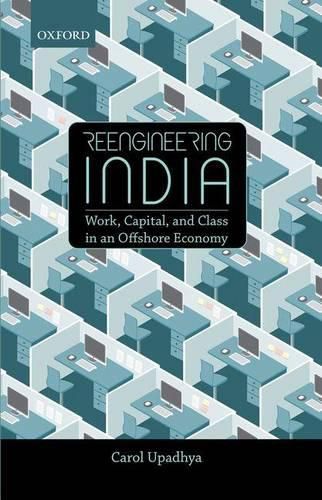
The march towards a ‘new India’ began with its entry onto the global stage as a rising economic power, impelled by liberalization policies and the forces of globalization. The success of Indias information technology (IT) industry symbolizes these larger developments, yet we lack a critical understanding of the wider social and cultural reverberations of this phenomenon. Reengineering India explores India’s post-liberalization transformation through the lens of the software industry.
This book views the IT industry as a key site where new identities, aspirations, and social imaginaries are being created and circulated. It examines the origins and organization of software capital, the production of the Indian IT workforce, the introduction of new forms of work and management, and the connections between software and the new middle class. The author argues that the software industry has been central to India’s post-liberalization refashioning, yet it remains deeply embedded in older structures of inequality and modes of accumulation.
An anthropological account of the relationship between work, class, capital, and culture in Indias new economy, this book is essential reading for thinking about the future of the post-IT revolution nation.
$9.00 standard shipping within Australia
FREE standard shipping within Australia for orders over $100.00
Express & International shipping calculated at checkout
Stock availability can be subject to change without notice. We recommend calling the shop or contacting our online team to check availability of low stock items. Please see our Shopping Online page for more details.
The march towards a ‘new India’ began with its entry onto the global stage as a rising economic power, impelled by liberalization policies and the forces of globalization. The success of Indias information technology (IT) industry symbolizes these larger developments, yet we lack a critical understanding of the wider social and cultural reverberations of this phenomenon. Reengineering India explores India’s post-liberalization transformation through the lens of the software industry.
This book views the IT industry as a key site where new identities, aspirations, and social imaginaries are being created and circulated. It examines the origins and organization of software capital, the production of the Indian IT workforce, the introduction of new forms of work and management, and the connections between software and the new middle class. The author argues that the software industry has been central to India’s post-liberalization refashioning, yet it remains deeply embedded in older structures of inequality and modes of accumulation.
An anthropological account of the relationship between work, class, capital, and culture in Indias new economy, this book is essential reading for thinking about the future of the post-IT revolution nation.
Search our extensive online catalogue.
