Readings Newsletter
Become a Readings Member to make your shopping experience even easier.
Sign in or sign up for free!
You’re not far away from qualifying for FREE standard shipping within Australia
You’ve qualified for FREE standard shipping within Australia
The cart is loading…


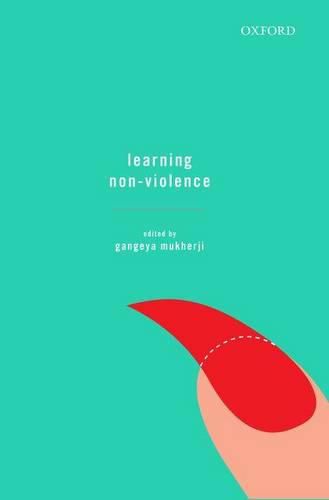
Violence as a concept and practice has largely been unsuccessful in preventing or resolving conflicts. In fact, violence as an instinct is opposed to the values that build the foundation of human civilizationrespecting life, diversity, and interdependence within society. The essays in this volume discuss the concept of non-violence in totality and also recognize its vulnerability, particularly in the context of what can be called learned non-violence. Structured around four themes-religion, protest, the modern condition, and the world today-the book stimulates the reader to consider the practical possibilities of non-violence. In the process it tries to develop an engagement between modern discourses and the ancient vocabulary of the concept. Delving into the enterprise from different perspectives across disciplines, the contributors offer a rich intersection of not only the past and present, but also various approaches that theorize the concept, thereby visualizing the possibilities of a sustainable moral pedagogy of non-violence.
$9.00 standard shipping within Australia
FREE standard shipping within Australia for orders over $100.00
Express & International shipping calculated at checkout
Stock availability can be subject to change without notice. We recommend calling the shop or contacting our online team to check availability of low stock items. Please see our Shopping Online page for more details.
Violence as a concept and practice has largely been unsuccessful in preventing or resolving conflicts. In fact, violence as an instinct is opposed to the values that build the foundation of human civilizationrespecting life, diversity, and interdependence within society. The essays in this volume discuss the concept of non-violence in totality and also recognize its vulnerability, particularly in the context of what can be called learned non-violence. Structured around four themes-religion, protest, the modern condition, and the world today-the book stimulates the reader to consider the practical possibilities of non-violence. In the process it tries to develop an engagement between modern discourses and the ancient vocabulary of the concept. Delving into the enterprise from different perspectives across disciplines, the contributors offer a rich intersection of not only the past and present, but also various approaches that theorize the concept, thereby visualizing the possibilities of a sustainable moral pedagogy of non-violence.
Search our extensive online catalogue.
