Readings Newsletter
Become a Readings Member to make your shopping experience even easier.
Sign in or sign up for free!
You’re not far away from qualifying for FREE standard shipping within Australia
You’ve qualified for FREE standard shipping within Australia
The cart is loading…


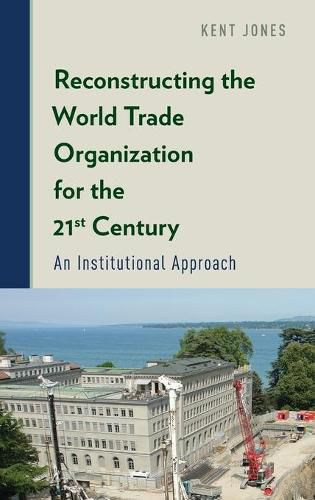
The institutional shortcomings of the World Trade Organization (WTO) became apparent during the Doha Round of Trade negotiations that began in 2001 and which aimed to improve the success of developing countries’ trading by lowering trade barriers and adjusting other trade rules. This development agenda meant different things to rich and poor countries. In addition, many of the circumstances that supported success in General Agreement on Tariffs and Trade (GATT) negotiations of 1947 were no longer present after the WTO was founded in 1995. In Reconstructing the World Trade Organization for the 21st Century, Kent Jones examines the difficulties of the WTO in completing multilateral trade negotiations and possible ways to restore its ability to do so. The problem lies in the institutional structure it inherited from the GATT, which was designed for a more limited scope of trade negotiations among a relatively small number of wealthier, industrialized countries. Jones presents an institutional model of the GATT/WTO system, which describes why such an organization exists and how it is supposed to accomplish its goals. Institutional reforms will be necessary to restore the WTO’s ability to complete global trade agreements, including a more flexible application of the consensus rule, a common understanding among all members about the limits of domestic policy space that is subject to negotiation, and clearer rules on reciprocity obligations. The popularity of bilateral and regional trade agreements, which have emerged as the alternative to WTO agreements, presents a threat to the WTO’s relevance in trade negotiations, but also an opportunity to multilateralize new and deeper trade integration in future WTO agreements. Aid for trade may also play an instrumental role in bringing more developing countries into WTO disciplines. Above all, WTO members must develop new ways to find common ground in order to negotiate for mutual gains from trade.
$9.00 standard shipping within Australia
FREE standard shipping within Australia for orders over $100.00
Express & International shipping calculated at checkout
Stock availability can be subject to change without notice. We recommend calling the shop or contacting our online team to check availability of low stock items. Please see our Shopping Online page for more details.
The institutional shortcomings of the World Trade Organization (WTO) became apparent during the Doha Round of Trade negotiations that began in 2001 and which aimed to improve the success of developing countries’ trading by lowering trade barriers and adjusting other trade rules. This development agenda meant different things to rich and poor countries. In addition, many of the circumstances that supported success in General Agreement on Tariffs and Trade (GATT) negotiations of 1947 were no longer present after the WTO was founded in 1995. In Reconstructing the World Trade Organization for the 21st Century, Kent Jones examines the difficulties of the WTO in completing multilateral trade negotiations and possible ways to restore its ability to do so. The problem lies in the institutional structure it inherited from the GATT, which was designed for a more limited scope of trade negotiations among a relatively small number of wealthier, industrialized countries. Jones presents an institutional model of the GATT/WTO system, which describes why such an organization exists and how it is supposed to accomplish its goals. Institutional reforms will be necessary to restore the WTO’s ability to complete global trade agreements, including a more flexible application of the consensus rule, a common understanding among all members about the limits of domestic policy space that is subject to negotiation, and clearer rules on reciprocity obligations. The popularity of bilateral and regional trade agreements, which have emerged as the alternative to WTO agreements, presents a threat to the WTO’s relevance in trade negotiations, but also an opportunity to multilateralize new and deeper trade integration in future WTO agreements. Aid for trade may also play an instrumental role in bringing more developing countries into WTO disciplines. Above all, WTO members must develop new ways to find common ground in order to negotiate for mutual gains from trade.
Search our extensive online catalogue.
