Readings Newsletter
Become a Readings Member to make your shopping experience even easier.
Sign in or sign up for free!
You’re not far away from qualifying for FREE standard shipping within Australia
You’ve qualified for FREE standard shipping within Australia
The cart is loading…


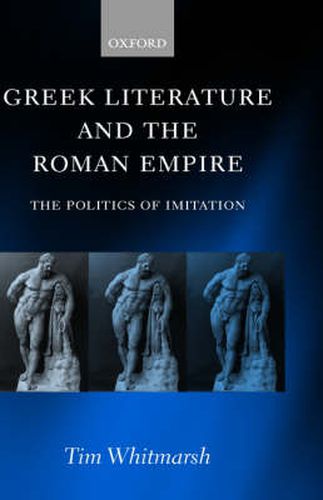
Greek Literature and the Roman Empire uses up-to-date literary and cultural theory to make a major and original contribution to the appreciation of Greek literature written under the Roman Empire during the second century CE (the so-called ‘Second Sophistic’). This literature should not be dismissed as unoriginal and mediocre. Rather, its central preoccupations, especially mimesis and paideia, provide significant insights into the definition of Greek identity during the period. Focusing upon a series of key texts by important authors (including Dio Chrysostom, Plutarch, Philostratus, Lucian, Favorinus, and the novelists), Whitmarsh argues that narratives telling of educated Greeks’ philosophical advice to empowered Romans (including emperors) offer a crucial point of entry into the complex and often ambivalent relationships between Roman conquerors and Greek subjects. Their authors’ rich and complex engagement with the literary past articulates an ingenious and sophisticated response to their present socio-political circumstances.
$9.00 standard shipping within Australia
FREE standard shipping within Australia for orders over $100.00
Express & International shipping calculated at checkout
Stock availability can be subject to change without notice. We recommend calling the shop or contacting our online team to check availability of low stock items. Please see our Shopping Online page for more details.
Greek Literature and the Roman Empire uses up-to-date literary and cultural theory to make a major and original contribution to the appreciation of Greek literature written under the Roman Empire during the second century CE (the so-called ‘Second Sophistic’). This literature should not be dismissed as unoriginal and mediocre. Rather, its central preoccupations, especially mimesis and paideia, provide significant insights into the definition of Greek identity during the period. Focusing upon a series of key texts by important authors (including Dio Chrysostom, Plutarch, Philostratus, Lucian, Favorinus, and the novelists), Whitmarsh argues that narratives telling of educated Greeks’ philosophical advice to empowered Romans (including emperors) offer a crucial point of entry into the complex and often ambivalent relationships between Roman conquerors and Greek subjects. Their authors’ rich and complex engagement with the literary past articulates an ingenious and sophisticated response to their present socio-political circumstances.
Search our extensive online catalogue.
