Readings Newsletter
Become a Readings Member to make your shopping experience even easier.
Sign in or sign up for free!
You’re not far away from qualifying for FREE standard shipping within Australia
You’ve qualified for FREE standard shipping within Australia
The cart is loading…


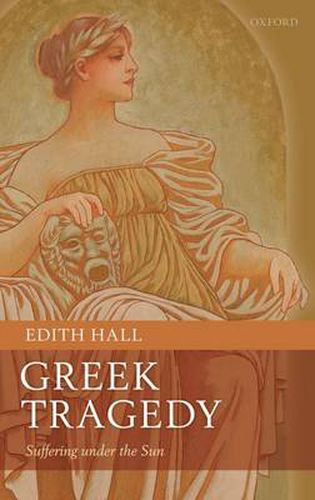
This is an invaluable introduction to ancient Greek tragedy which discusses every surviving play in detail and provides all the background information necessary for understanding the context and content of the plays. Edith Hall argues that the essential feature of the genre is that it always depicts terrible human suffering and death, but in a way that invites philosophical enquiry into their causes and effects, This enquiry was played out in the bright sunlight of open-air theatre, which became a key marker of the boundary between living and dead. The first half of the book is divided into four chapters which address the social and physical contexts in which the plays were performed, the contribution of the poets, actors, funders, and audiences, the poetic composition of the texts, their performance conventions, main themes, and focus on religion, politics, and the family. The second half consists of individual essays on each of the surviving thirty-three plays by the Greek tragedians, and an account of the recent performance of Greek tragic theatre and tragic fragments. An up-to-date ‘Suggestions for further reading’ is included.
$9.00 standard shipping within Australia
FREE standard shipping within Australia for orders over $100.00
Express & International shipping calculated at checkout
Stock availability can be subject to change without notice. We recommend calling the shop or contacting our online team to check availability of low stock items. Please see our Shopping Online page for more details.
This is an invaluable introduction to ancient Greek tragedy which discusses every surviving play in detail and provides all the background information necessary for understanding the context and content of the plays. Edith Hall argues that the essential feature of the genre is that it always depicts terrible human suffering and death, but in a way that invites philosophical enquiry into their causes and effects, This enquiry was played out in the bright sunlight of open-air theatre, which became a key marker of the boundary between living and dead. The first half of the book is divided into four chapters which address the social and physical contexts in which the plays were performed, the contribution of the poets, actors, funders, and audiences, the poetic composition of the texts, their performance conventions, main themes, and focus on religion, politics, and the family. The second half consists of individual essays on each of the surviving thirty-three plays by the Greek tragedians, and an account of the recent performance of Greek tragic theatre and tragic fragments. An up-to-date ‘Suggestions for further reading’ is included.
Search our extensive online catalogue.
