Readings Newsletter
Become a Readings Member to make your shopping experience even easier.
Sign in or sign up for free!
You’re not far away from qualifying for FREE standard shipping within Australia
You’ve qualified for FREE standard shipping within Australia
The cart is loading…


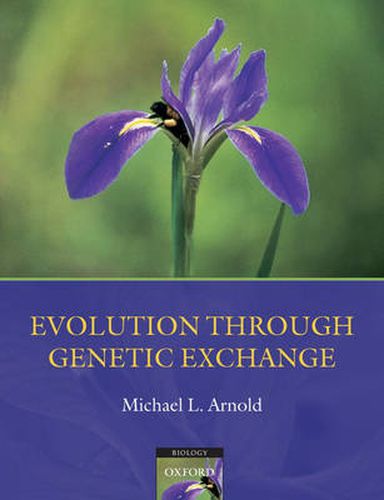
Even before the publication of Darwin’s Origin of Species, the perception of evolutionary change has been a tree-like pattern of diversification - with divergent branches spreading further and further from the trunk. In the only illustration of Darwin’s treatise, branches large and small never reconnect. However, it is now evident that this view does not adequately encompass the richness of evolutionary pattern and process. Instead, the evolution of species from microbes to mammals builds like a web that crosses and re-crosses through genetic exchange, even as it grows outward from a point of origin. Some of the avenues for genetic exchange, for example introgression through sexual recombination versus lateral gene transfer mediated by transposable elements, are based on definably different molecular mechanisms. However, even such widely different genetic processes may result in similar effects on adaptations (either new or transferred), genome evolution, population genetics, and the evolutionary/ecological trajectory of organisms.For example, the evolution of novel adaptations (resulting from lateral gene transfer) leading to the flea-borne, deadly, causative agent of plague from a rarely-fatal, orally-transmitted, bacterial species is quite similar to the adaptations accrued from natural hybridization between annual sunflower species resulting in the formation of several new species. Thus, more and more data indicate that evolution has resulted in lineages consisting of mosaics of genes derived from different ancestors. It is therefore becoming increasingly clear that the tree is an inadequate metaphor of evolutionary change. In this book, Arnold promotes the ‘web-of-life’ metaphor as a more appropriate representation of evolutionary change in all lifeforms.
$9.00 standard shipping within Australia
FREE standard shipping within Australia for orders over $100.00
Express & International shipping calculated at checkout
Stock availability can be subject to change without notice. We recommend calling the shop or contacting our online team to check availability of low stock items. Please see our Shopping Online page for more details.
Even before the publication of Darwin’s Origin of Species, the perception of evolutionary change has been a tree-like pattern of diversification - with divergent branches spreading further and further from the trunk. In the only illustration of Darwin’s treatise, branches large and small never reconnect. However, it is now evident that this view does not adequately encompass the richness of evolutionary pattern and process. Instead, the evolution of species from microbes to mammals builds like a web that crosses and re-crosses through genetic exchange, even as it grows outward from a point of origin. Some of the avenues for genetic exchange, for example introgression through sexual recombination versus lateral gene transfer mediated by transposable elements, are based on definably different molecular mechanisms. However, even such widely different genetic processes may result in similar effects on adaptations (either new or transferred), genome evolution, population genetics, and the evolutionary/ecological trajectory of organisms.For example, the evolution of novel adaptations (resulting from lateral gene transfer) leading to the flea-borne, deadly, causative agent of plague from a rarely-fatal, orally-transmitted, bacterial species is quite similar to the adaptations accrued from natural hybridization between annual sunflower species resulting in the formation of several new species. Thus, more and more data indicate that evolution has resulted in lineages consisting of mosaics of genes derived from different ancestors. It is therefore becoming increasingly clear that the tree is an inadequate metaphor of evolutionary change. In this book, Arnold promotes the ‘web-of-life’ metaphor as a more appropriate representation of evolutionary change in all lifeforms.
Search our extensive online catalogue.
