Readings Newsletter
Become a Readings Member to make your shopping experience even easier.
Sign in or sign up for free!
You’re not far away from qualifying for FREE standard shipping within Australia
You’ve qualified for FREE standard shipping within Australia
The cart is loading…


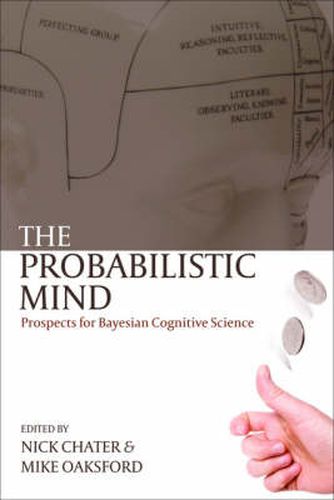
The rational analysis method, first proposed by John R. Anderson, has been enormously influential in helping us understand high-level cognitive processes. ‘The Probabilistic Mind’ is a follow-up to the influential and highly cited ‘Rational Models of Cognition’ (OUP, 1998). It brings together developments in understanding how, and how far, high-level cognitive processes can be understood in rational terms, and particularly using probabilistic Bayesian methods. It synthesizes and evaluates the progress in the past decade, taking into account developments in Bayesian statistics, statistical analysis of the cognitive ‘environment’ and a variety of theoretical and experimental lines of research. The scope of the book is broad, covering important recent work in reasoning, decision making, categorization, and memory. Including chapters from many of the leading figures in this field, ‘The Probabilistic Mind’ will be valuable for psychologists and philosophers interested in cognition.
$9.00 standard shipping within Australia
FREE standard shipping within Australia for orders over $100.00
Express & International shipping calculated at checkout
Stock availability can be subject to change without notice. We recommend calling the shop or contacting our online team to check availability of low stock items. Please see our Shopping Online page for more details.
The rational analysis method, first proposed by John R. Anderson, has been enormously influential in helping us understand high-level cognitive processes. ‘The Probabilistic Mind’ is a follow-up to the influential and highly cited ‘Rational Models of Cognition’ (OUP, 1998). It brings together developments in understanding how, and how far, high-level cognitive processes can be understood in rational terms, and particularly using probabilistic Bayesian methods. It synthesizes and evaluates the progress in the past decade, taking into account developments in Bayesian statistics, statistical analysis of the cognitive ‘environment’ and a variety of theoretical and experimental lines of research. The scope of the book is broad, covering important recent work in reasoning, decision making, categorization, and memory. Including chapters from many of the leading figures in this field, ‘The Probabilistic Mind’ will be valuable for psychologists and philosophers interested in cognition.
Search our extensive online catalogue.
