Readings Newsletter
Become a Readings Member to make your shopping experience even easier.
Sign in or sign up for free!
You’re not far away from qualifying for FREE standard shipping within Australia
You’ve qualified for FREE standard shipping within Australia
The cart is loading…


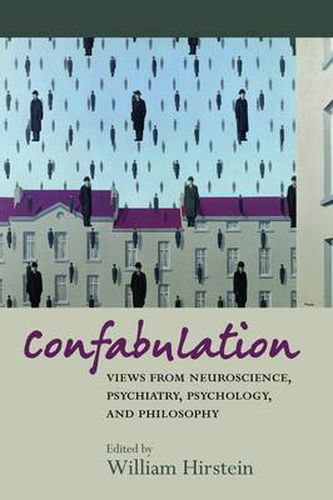
When people confabulate, they make a false claim that they honestly believe is true. The book contains countless fascinating examples of confabulatory behaviour - people falsely recalling events from their childhood, the subject who was partially blind but insisted he could see, the amputee convinced that he retained all his limbs, to the patient who believed that his own parents had been replaced by imposters. Though confabulations can result from neurological damage, they can also appear in perfectly healthy people. Yet, how can confabulators so often appear to be of sound mind, yet not see their own errors?
This book brings together some of the most advanced thinking on confabulation in neuroscience, psychiatry, psychology, and philosophy, in an attempt to understand this phenomenon; what are the clinical symptoms of each type of confabulation? Which brain functions are damaged in clinical confabulators? What are the neuropsychological characteristics of each type? What causes confabulation in healthy individuals? One reason why the study of confabulation is important is that there is wide agreement that the malfunctions that produce confabulation are malfunctions in significant, high-level cognitive processes.
With contributions from a range of leading psychologists, psychiatrists, neuroscientists, and philosophers, the book develops an interdisciplinary dialogue that promises to increase our understanding of confabulatory neurological patients, and perhaps help us better understand memory, consciousness, and human nature itself.
$9.00 standard shipping within Australia
FREE standard shipping within Australia for orders over $100.00
Express & International shipping calculated at checkout
Stock availability can be subject to change without notice. We recommend calling the shop or contacting our online team to check availability of low stock items. Please see our Shopping Online page for more details.
When people confabulate, they make a false claim that they honestly believe is true. The book contains countless fascinating examples of confabulatory behaviour - people falsely recalling events from their childhood, the subject who was partially blind but insisted he could see, the amputee convinced that he retained all his limbs, to the patient who believed that his own parents had been replaced by imposters. Though confabulations can result from neurological damage, they can also appear in perfectly healthy people. Yet, how can confabulators so often appear to be of sound mind, yet not see their own errors?
This book brings together some of the most advanced thinking on confabulation in neuroscience, psychiatry, psychology, and philosophy, in an attempt to understand this phenomenon; what are the clinical symptoms of each type of confabulation? Which brain functions are damaged in clinical confabulators? What are the neuropsychological characteristics of each type? What causes confabulation in healthy individuals? One reason why the study of confabulation is important is that there is wide agreement that the malfunctions that produce confabulation are malfunctions in significant, high-level cognitive processes.
With contributions from a range of leading psychologists, psychiatrists, neuroscientists, and philosophers, the book develops an interdisciplinary dialogue that promises to increase our understanding of confabulatory neurological patients, and perhaps help us better understand memory, consciousness, and human nature itself.
Search our extensive online catalogue.
