Readings Newsletter
Become a Readings Member to make your shopping experience even easier.
Sign in or sign up for free!
You’re not far away from qualifying for FREE standard shipping within Australia
You’ve qualified for FREE standard shipping within Australia
The cart is loading…


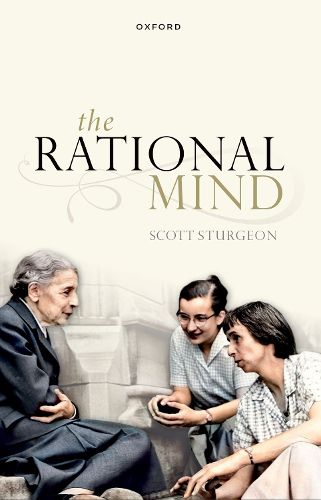
Scott Sturgeon presents an original account of mental states and their dynamics. He develops a detailed story of coarse- and fine-grained mental states, a novel perspective on how they fit together, an engaging theory of the rational transitions between them, and a fresh view of how formal methods can advance our understanding in this area. In doing so, he addresses a deep four-way divide in literature on epistemic rationality. Formal epistemology is done in specialized languages--often seeming a lot more like mathematics than Plato--and so can alienate philosophers who are drawn to more traditional work on thought experiments in epistemic rationality. Conversely, informal epistemology appears to be a lot more like Plato than mathematics and, as such, it tends to deter philosophers drawn to formal models of the phenomena. Similarly, the epistemology of coarse-grained states boils down everything to a discussion of rational belief--making the area appear a lot more like foundations of knowledge than anything useful for the theory rational decision, such as decision-making under uncertainty. The Rational Mind unifies work in all of these areas for the first time.
$9.00 standard shipping within Australia
FREE standard shipping within Australia for orders over $100.00
Express & International shipping calculated at checkout
Stock availability can be subject to change without notice. We recommend calling the shop or contacting our online team to check availability of low stock items. Please see our Shopping Online page for more details.
Scott Sturgeon presents an original account of mental states and their dynamics. He develops a detailed story of coarse- and fine-grained mental states, a novel perspective on how they fit together, an engaging theory of the rational transitions between them, and a fresh view of how formal methods can advance our understanding in this area. In doing so, he addresses a deep four-way divide in literature on epistemic rationality. Formal epistemology is done in specialized languages--often seeming a lot more like mathematics than Plato--and so can alienate philosophers who are drawn to more traditional work on thought experiments in epistemic rationality. Conversely, informal epistemology appears to be a lot more like Plato than mathematics and, as such, it tends to deter philosophers drawn to formal models of the phenomena. Similarly, the epistemology of coarse-grained states boils down everything to a discussion of rational belief--making the area appear a lot more like foundations of knowledge than anything useful for the theory rational decision, such as decision-making under uncertainty. The Rational Mind unifies work in all of these areas for the first time.
Search our extensive online catalogue.
