Readings Newsletter
Become a Readings Member to make your shopping experience even easier.
Sign in or sign up for free!
You’re not far away from qualifying for FREE standard shipping within Australia
You’ve qualified for FREE standard shipping within Australia
The cart is loading…


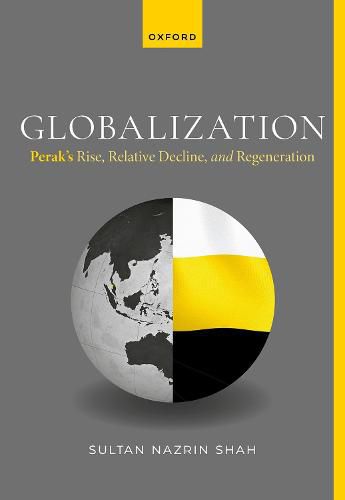
Written by Sultan Nazrin Shah - the author of the highly acclaimed works Charting the Economy and Striving for Inclusive Development - this book is a pioneering study of the many economic and social changes in the natural resource-rich Malaysian state of Perak over the last two centuries. When globalization first took hold and international trade networks broadened and deepened in the first half of the 19th century, and a new capitalist world order emerged in the second, Perak was a key player. Its tin was in high demand in Western industrializing countries and foreign capital, labour, and technology propelled it forward. By 1900, Perak accounted for almost half of Malaya's tin output and a staggering quarter of world output, with its prosperity making it the Malay peninsula's commercial hub. Likewise, during the global rubber boom that began in the early 20th century as cars were mass produced for the first time, Perak was the largest rubber-producing state in the peninsula. This book brings together a range of key sub-themes - economic geography, the institutional legacy of colonialism, increasing federal government centralization, forces of economic agglomeration, and human migration - which drove Perak's fortunes in sometimes dramatic economic cycles and ultimately led to the collapse of its tin and rubber industries and the migration of many of its young and skilled. The book concludes by looking forward, analysing Perak's characteristics, and extrapolating lessons from formerly wealthy industrial centres originally blessed with natural resources but subsequently left behind by new waves of globalization, such as Cornwall and Sheffield in the United Kingdom, and Pittsburgh and Scranton in the United States. With a new vision Perak can regenerate itself and once again emerge triumphant against a tough global background-Covid-19, war, and deglobalization.
$9.00 standard shipping within Australia
FREE standard shipping within Australia for orders over $100.00
Express & International shipping calculated at checkout
Stock availability can be subject to change without notice. We recommend calling the shop or contacting our online team to check availability of low stock items. Please see our Shopping Online page for more details.
Written by Sultan Nazrin Shah - the author of the highly acclaimed works Charting the Economy and Striving for Inclusive Development - this book is a pioneering study of the many economic and social changes in the natural resource-rich Malaysian state of Perak over the last two centuries. When globalization first took hold and international trade networks broadened and deepened in the first half of the 19th century, and a new capitalist world order emerged in the second, Perak was a key player. Its tin was in high demand in Western industrializing countries and foreign capital, labour, and technology propelled it forward. By 1900, Perak accounted for almost half of Malaya's tin output and a staggering quarter of world output, with its prosperity making it the Malay peninsula's commercial hub. Likewise, during the global rubber boom that began in the early 20th century as cars were mass produced for the first time, Perak was the largest rubber-producing state in the peninsula. This book brings together a range of key sub-themes - economic geography, the institutional legacy of colonialism, increasing federal government centralization, forces of economic agglomeration, and human migration - which drove Perak's fortunes in sometimes dramatic economic cycles and ultimately led to the collapse of its tin and rubber industries and the migration of many of its young and skilled. The book concludes by looking forward, analysing Perak's characteristics, and extrapolating lessons from formerly wealthy industrial centres originally blessed with natural resources but subsequently left behind by new waves of globalization, such as Cornwall and Sheffield in the United Kingdom, and Pittsburgh and Scranton in the United States. With a new vision Perak can regenerate itself and once again emerge triumphant against a tough global background-Covid-19, war, and deglobalization.
Search our extensive online catalogue.
