Readings Newsletter
Become a Readings Member to make your shopping experience even easier.
Sign in or sign up for free!
You’re not far away from qualifying for FREE standard shipping within Australia
You’ve qualified for FREE standard shipping within Australia
The cart is loading…


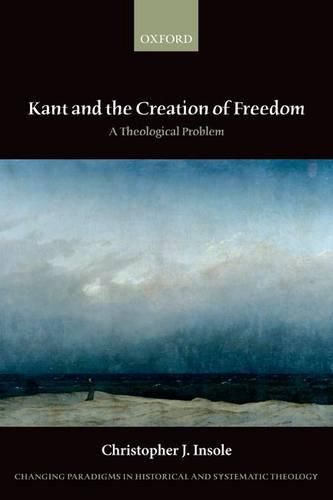
Kant actively struggles with the problem of how to conceive of God’s creative action in relation to human freedom. He comes to the view that human freedom can only be protected if God withdraws in certain ways from the created world. The two pillars of Kant’s mature philosophy - transcendental idealism and freedom - are in part shaped and motivated by Kant’s need to provide a solution to his theological problem. The medieval and early modern theological tradition conceives of divine action as unlike the action of any created being. When the creature acts, God directly causes this action, but without reducing the creature’s freedom. Kant explicitly discusses and rejects this account of divine and human concursus. This rejection has significant and surprising ramifications for Kant’s wider philosophy, explaining otherwise incomprehensible claims in his critical philosophy. Christopher J. Insole presents a definitive study in the history of ideas, engaging with a wide range of Kant’s texts from 1749 until the early 1800s. Many of these texts have received little or no attention in Kant studies to date. Insole places Kant’s thought in relation to numerous historical and traditional positions and illuminates these positions by a close engagement with recent debates in analytical philosophy and systematic theology. Kant is unrelentingly honest when grappling with the difficulty of relating divine and human freedom. This study, of Kant’s theological struggle and legacy, goes to the heart of the problem in the modern reception of what the Christian tradition has affirmed about human freedom. As such, the book throws light on one of the defining fault-lines in modern theology and philosophy.
$9.00 standard shipping within Australia
FREE standard shipping within Australia for orders over $100.00
Express & International shipping calculated at checkout
Stock availability can be subject to change without notice. We recommend calling the shop or contacting our online team to check availability of low stock items. Please see our Shopping Online page for more details.
Kant actively struggles with the problem of how to conceive of God’s creative action in relation to human freedom. He comes to the view that human freedom can only be protected if God withdraws in certain ways from the created world. The two pillars of Kant’s mature philosophy - transcendental idealism and freedom - are in part shaped and motivated by Kant’s need to provide a solution to his theological problem. The medieval and early modern theological tradition conceives of divine action as unlike the action of any created being. When the creature acts, God directly causes this action, but without reducing the creature’s freedom. Kant explicitly discusses and rejects this account of divine and human concursus. This rejection has significant and surprising ramifications for Kant’s wider philosophy, explaining otherwise incomprehensible claims in his critical philosophy. Christopher J. Insole presents a definitive study in the history of ideas, engaging with a wide range of Kant’s texts from 1749 until the early 1800s. Many of these texts have received little or no attention in Kant studies to date. Insole places Kant’s thought in relation to numerous historical and traditional positions and illuminates these positions by a close engagement with recent debates in analytical philosophy and systematic theology. Kant is unrelentingly honest when grappling with the difficulty of relating divine and human freedom. This study, of Kant’s theological struggle and legacy, goes to the heart of the problem in the modern reception of what the Christian tradition has affirmed about human freedom. As such, the book throws light on one of the defining fault-lines in modern theology and philosophy.
Search our extensive online catalogue.
