Readings Newsletter
Become a Readings Member to make your shopping experience even easier.
Sign in or sign up for free!
You’re not far away from qualifying for FREE standard shipping within Australia
You’ve qualified for FREE standard shipping within Australia
The cart is loading…


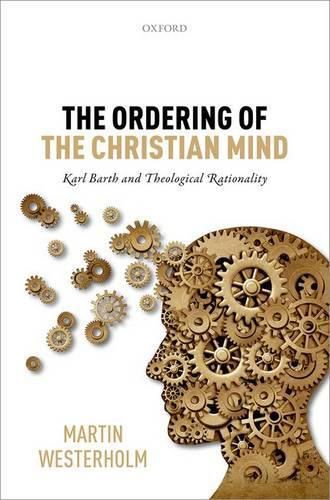
The adequacy of Karl Barth’s conception of theological reasoning is a decisive point of contention in assessments of the legacy and potential of twentieth-century theology. Barth’s work is a formative point from which other twentieth-century figures take their orientation; later thinkers have most often taken their leave from his work by suggesting that it reflects an underdeveloped conception of the activities of human reason. The regularity with which other thinkers orient themselves in relation to Barth by pointing to a positivism, faith subjectivism, or fideism in his work elevates the question of theological reasoning to a decisive point in the comprehension of twentieth-century theology.The Ordering of the Christian Mind facilitates evaluation of Barth’s work by reconstructing his conception of the activities of reason. It does so, first, by reframing the question. Martin Westerholm shows that Barth’s understanding of the moral structure of the relation between God and creatures demands that the question of theological reasoning be approached through an ethical inquiry into the proper ordering of the activities of the mind. Secondly, Westerholm deploys a new set of categories through which Barth’s work can be described. He shows that, by working through an account of the noetic corollaries of faith and of the understanding of faith, Barth develops a coherent and compelling account of the standpoint, orientation, and freedom of theological reasoning. Development of this material is accompanied by new accounts of Barth’s earlier theology of the resurrection, his theological development, and the significance of his engagement with Anselm.
$9.00 standard shipping within Australia
FREE standard shipping within Australia for orders over $100.00
Express & International shipping calculated at checkout
Stock availability can be subject to change without notice. We recommend calling the shop or contacting our online team to check availability of low stock items. Please see our Shopping Online page for more details.
The adequacy of Karl Barth’s conception of theological reasoning is a decisive point of contention in assessments of the legacy and potential of twentieth-century theology. Barth’s work is a formative point from which other twentieth-century figures take their orientation; later thinkers have most often taken their leave from his work by suggesting that it reflects an underdeveloped conception of the activities of human reason. The regularity with which other thinkers orient themselves in relation to Barth by pointing to a positivism, faith subjectivism, or fideism in his work elevates the question of theological reasoning to a decisive point in the comprehension of twentieth-century theology.The Ordering of the Christian Mind facilitates evaluation of Barth’s work by reconstructing his conception of the activities of reason. It does so, first, by reframing the question. Martin Westerholm shows that Barth’s understanding of the moral structure of the relation between God and creatures demands that the question of theological reasoning be approached through an ethical inquiry into the proper ordering of the activities of the mind. Secondly, Westerholm deploys a new set of categories through which Barth’s work can be described. He shows that, by working through an account of the noetic corollaries of faith and of the understanding of faith, Barth develops a coherent and compelling account of the standpoint, orientation, and freedom of theological reasoning. Development of this material is accompanied by new accounts of Barth’s earlier theology of the resurrection, his theological development, and the significance of his engagement with Anselm.
Search our extensive online catalogue.
