Readings Newsletter
Become a Readings Member to make your shopping experience even easier.
Sign in or sign up for free!
You’re not far away from qualifying for FREE standard shipping within Australia
You’ve qualified for FREE standard shipping within Australia
The cart is loading…


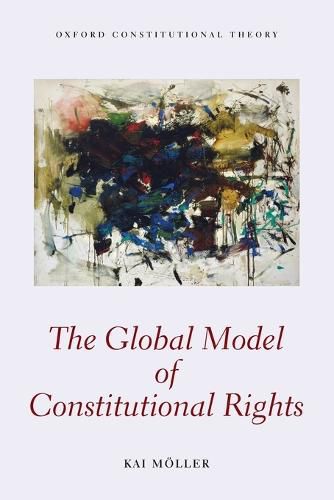
Since the end of the Second World War and the subsequent success of constitutional judicial review, one particular model of constitutional rights has had remarkable success, first in Europe and now globally. This global model of constitutional rights is characterized by an extremely broad approach to the scope of rights (sometimes referred to as ‘rights inflation’), the acceptance of horizontal effect of rights, positive obligations, and increasingly also socio-economic rights, and the use of the doctrines of balancing and proportionality to determine the permissible limitations of rights. Drawing on analyses of a broad range of cases from the UK, the European Court of Human Rights, Germany, Canada, the US, and South Africa, this book provides the first substantive moral, reconstructive theory of the global model. It shows that it is based on a coherent conception of constitutional rights which connects to attractive accounts of judicial review, democracy and the separation of powers. The first part of the book develops a theory of the scope of rights under the global model. It defends the idea of a general right to personal autonomy; a right to everything which, according to the agent’s self-conception, is in his or her interest. The function of this right is to acknowledge that every act by a public authority which places a burden on a person’s autonomy requires justification. The book concludes by demonstrating a theory of the structure of this justification which offers original and useful accounts of the important doctrines of balancing and proportionality.
$9.00 standard shipping within Australia
FREE standard shipping within Australia for orders over $100.00
Express & International shipping calculated at checkout
Stock availability can be subject to change without notice. We recommend calling the shop or contacting our online team to check availability of low stock items. Please see our Shopping Online page for more details.
Since the end of the Second World War and the subsequent success of constitutional judicial review, one particular model of constitutional rights has had remarkable success, first in Europe and now globally. This global model of constitutional rights is characterized by an extremely broad approach to the scope of rights (sometimes referred to as ‘rights inflation’), the acceptance of horizontal effect of rights, positive obligations, and increasingly also socio-economic rights, and the use of the doctrines of balancing and proportionality to determine the permissible limitations of rights. Drawing on analyses of a broad range of cases from the UK, the European Court of Human Rights, Germany, Canada, the US, and South Africa, this book provides the first substantive moral, reconstructive theory of the global model. It shows that it is based on a coherent conception of constitutional rights which connects to attractive accounts of judicial review, democracy and the separation of powers. The first part of the book develops a theory of the scope of rights under the global model. It defends the idea of a general right to personal autonomy; a right to everything which, according to the agent’s self-conception, is in his or her interest. The function of this right is to acknowledge that every act by a public authority which places a burden on a person’s autonomy requires justification. The book concludes by demonstrating a theory of the structure of this justification which offers original and useful accounts of the important doctrines of balancing and proportionality.
Search our extensive online catalogue.
