Readings Newsletter
Become a Readings Member to make your shopping experience even easier.
Sign in or sign up for free!
You’re not far away from qualifying for FREE standard shipping within Australia
You’ve qualified for FREE standard shipping within Australia
The cart is loading…


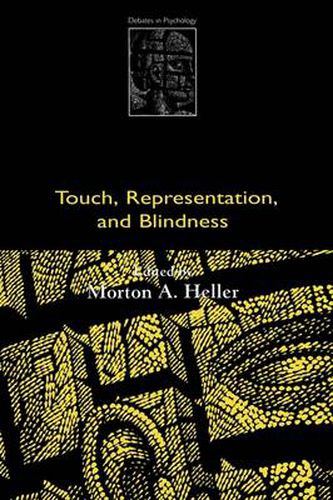
Psychological studies of touch and blindness have been fraught with controversy. Within this field there remains an important theoretical divide. Many researchers have taken a cognitive approach to the study of touch and blindness, relating these to higher order processes, such as memory and concept formation. Others adopt a theoretical perspective, arguing that it not necessary to consider the ‘internal representation’ of the stimuli, when investigating touch - thus people make use of information from the physical biomechanical properties of their limbs as they assess the physical properties of objects. In addition, psychologists differ in the relative importance they place on the modality of sensory stimulation for subsequent perceptual experiences. Some psychologists argue that touch can do many of the things that are accomplished by vision, and claim that the mode of sensory stimulation is not critically important for perception, arguing that much information can be obtained through non-visual modalities. Others suggest that there are important consequences of a lack of visual experience, arguing for the importance of multiple forms of sensory input for conceptual development. New to the Debates in Psychology series, Touch, Representation, and Blindness brings together the leading investigators in these areas, each presenting the evidence for their side of the debate. An introductory chapter sets the theoretical and historical stage for the debate, and a concluding chapter draws together the different views and ideas set forth by the contributors, summarizing and resolving the discussion.
$9.00 standard shipping within Australia
FREE standard shipping within Australia for orders over $100.00
Express & International shipping calculated at checkout
Stock availability can be subject to change without notice. We recommend calling the shop or contacting our online team to check availability of low stock items. Please see our Shopping Online page for more details.
Psychological studies of touch and blindness have been fraught with controversy. Within this field there remains an important theoretical divide. Many researchers have taken a cognitive approach to the study of touch and blindness, relating these to higher order processes, such as memory and concept formation. Others adopt a theoretical perspective, arguing that it not necessary to consider the ‘internal representation’ of the stimuli, when investigating touch - thus people make use of information from the physical biomechanical properties of their limbs as they assess the physical properties of objects. In addition, psychologists differ in the relative importance they place on the modality of sensory stimulation for subsequent perceptual experiences. Some psychologists argue that touch can do many of the things that are accomplished by vision, and claim that the mode of sensory stimulation is not critically important for perception, arguing that much information can be obtained through non-visual modalities. Others suggest that there are important consequences of a lack of visual experience, arguing for the importance of multiple forms of sensory input for conceptual development. New to the Debates in Psychology series, Touch, Representation, and Blindness brings together the leading investigators in these areas, each presenting the evidence for their side of the debate. An introductory chapter sets the theoretical and historical stage for the debate, and a concluding chapter draws together the different views and ideas set forth by the contributors, summarizing and resolving the discussion.
Search our extensive online catalogue.
